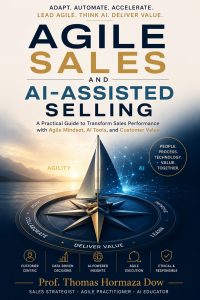
Categories
Agile AI Sales Book

Agile Sales for Executives

Building Trust, Pricing Power, and Revenue That Lasts

Sales executives are under constant pressure to grow revenue, protect margins, motivate teams, satisfy customers, and respond to changing market conditions. In that environment, it is understandable that many organizations focus heavily on activity, pipeline, speed, and quarterly targets.

Those things matter. But they are not enough.

The strongest sales organizations are beginning to understand that sustainable performance depends on more than closing transactions. It depends on trust, customer value, professional judgment, better qualification, stronger collaboration, and revenue that remains healthy over time.

This is where Agile Sales becomes strategically important.

Agile Sales is not about making sales less accountable. It is not about slowing down performance. It is not about replacing ambition with process. It is about helping sales organizations become more adaptive, customer-centered, disciplined, and commercially resilient.

For sales executives, the central question is simple: Are we building a sales organization that creates long-term business value, or are we only chasing short-term transactions?
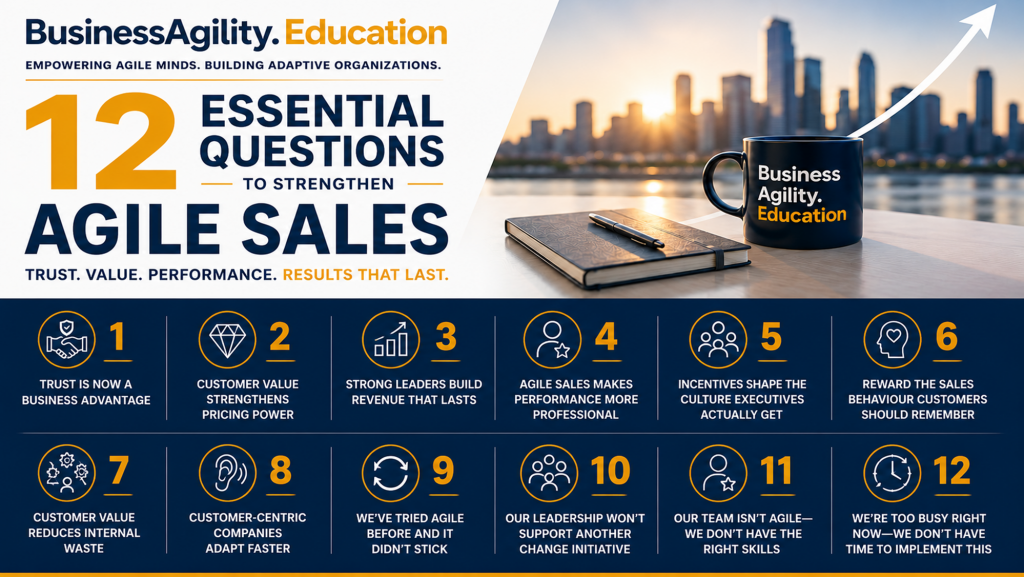
1. Trust Is Now a Business Advantage

Executive question: Are we building customer trust, or simply closing transactions?

Common objection: “Trust is important, but we can’t slow down the sales process.”

Strategic response: “Trust does not slow sales down. Lack of trust does. Customers move faster when they feel confident in the relationship.”

Customers remember more than what they purchased. They remember how they were treated, whether expectations were clear, whether promises were realistic, and whether the organization helped them make a confident decision.

Trust affects retention, referrals, reputation, renewal quality, and the long-term health of customer relationships. It also affects the speed of the sales process. Customers who feel uncertain, pressured, or confused usually slow down. They ask more defensive questions. They compare alternatives more aggressively. They delay decisions because they are not fully confident.

Trust is not a soft concept. It is operational. It improves communication, reduces resistance, and creates the conditions for more honest conversations. When customers trust the salesperson and the organization, they are more willing to discuss risks, priorities, objections, expectations, and decision criteria.

That makes the sales process clearer, not weaker.

A transaction may create revenue once. Trust creates relationships that continue generating value over time.

Key message: Trust builds confidence. Confidence drives results.

2. Customer Value Strengthens Pricing Power

Executive question: Are customers choosing us only because of price, or because they genuinely value working with us?

Common objection: “We’re in a highly competitive market. We can’t afford to lose deals on price.”

Strategic response: “The stronger the value and trust, the less dependent the organization becomes on discounting.”

In competitive markets, price pressure is real. Executives cannot ignore it. Procurement teams compare options. Competitors discount. Buyers look for leverage.

However, when a company competes mainly on price, it risks weakening its own position. Margins shrink. Differentiation becomes harder to defend. Customers become more transactional. Sales teams become conditioned to solve uncertainty with discounts instead of value.

Customers do not evaluate price in isolation. They also evaluate reliability, responsiveness, expertise, implementation quality, strategic relevance, risk reduction, and relationship quality.

Strong customer value strengthens pricing power because customers are not simply buying a product or service. They are buying confidence that the organization can help them achieve meaningful outcomes.

The goal is not to pretend price does not matter. It does. The goal is to make price one part of a larger value conversation rather than the only reason a customer chooses the company.

Customers may initially compare prices. But they stay because of value.

Key message: Create value. Reduce price sensitivity.

3. Strong Leaders Build Revenue That Lasts

Executive question: Are we building revenue that lasts, or revenue that creates future problems?

Common objection: “Right now, we need growth, not perfection.”

Strategic response: “Agile Sales is not about perfection. It is about reducing the kind of growth that creates churn, rework, and instability later.”

Not all revenue strengthens the organization equally.

Some revenue looks attractive at the beginning but becomes costly later. Poor-fit customers, unrealistic expectations, rushed qualification, weak onboarding, and overselling can create churn, dissatisfaction, support overload, implementation problems, forecasting instability, and internal friction.

This is the difference between fragile growth and healthy growth. Fragile growth often comes from discount-driven decisions, weak qualification, aggressive promises, or prioritizing volume over customer fit.

Healthy growth comes from the right customers, clear expectations, real value creation, strong onboarding, lasting relationships, and predictable results.

Strong executives understand that revenue quality matters as much as revenue quantity. A deal is not truly successful if it creates preventable problems for delivery teams, damages customer trust, or weakens long-term profitability.

Growth should not only look good in the current quarter. It should strengthen the business over time.

Key message: Focus on the right growth. Build revenue that lasts.

4. Agile Sales Makes Performance More Professional

Executive question: Are we helping sales teams become more professional, or simply pushing them harder?

Common objection: “Our salespeople already work hard.”

Strategic response: “Agile Sales helps hard work become more focused, more strategic, and more valuable to the customer.”

Many sales organizations already work hard. They make calls, send emails, follow up, manage pipeline, attend meetings, and pursue targets. The question is not only whether sales teams are busy.

High activity does not automatically create high value. A team can be extremely active and still struggle with weak discovery, poor qualification, repetitive outreach, scripted conversations, unclear value propositions, and transactional selling behaviours.

Agile Sales encourages salespeople to think more carefully about customer needs, business impact, qualification quality, communication effectiveness, and long-term relationship development.

It helps shift the sales conversation from “How do we close this?” to “How do we create enough value and confidence for the right customer to move forward?” That is a more professional standard.

The goal is not to reduce accountability. The goal is to improve the quality of sales judgment. Professional sales organizations do more than push harder. They listen better, diagnose better, communicate better, adapt better, and create more value.

Key message: Better conversations. Better results.

5. Incentives Shape the Culture Executives Actually Get

Executive question: Are our incentives aligned with the culture we claim to value?

Common objection: “If we reduce pressure, performance will drop.”

Strategic response: “Agile Sales does not remove accountability. It aligns accountability with healthier long-term outcomes.”

Executives often speak about customer value, collaboration, professionalism, long-term relationships, and sustainable growth. But employees pay close attention to what leadership rewards.

Organizations eventually become reflections of their measurement systems. If incentives reward only speed, volume, aggressive closing, and short-term activity, those behaviours will shape the customer experience, internal collaboration, and long-term priorities.

This does not mean employees are acting in bad faith. It means they are responding logically to the system around them.

Strong organizations still measure performance. They still care about revenue. They still expect discipline. But they also reward behaviours that support customer value, collaboration, long-term impact, retention, and sustainable growth.

If leaders say they value trust but reward only aggressive closing, the reward system wins. If leaders say they value collaboration but measure only individual short-term output, the measurement system wins.

Culture is not only taught. Culture is rewarded.

Key message: Align incentives. Drive the right behaviour.

6. Agile Sales Does Not Require a Massive Rollout

Executive question: Are we avoiding meaningful improvement because we assume change must be large, slow, and disruptive?

Common objection: “We don’t have time for another initiative right now.”

Strategic response: “Agile Sales delivers early wins through small, focused changes. You do not need a big rollout to see results. You need a better first step.”

Many executives hesitate to introduce Agile Sales because they assume it requires a large transformation project. This assumption often creates unnecessary resistance. Leaders already face sales targets, operational pressure, staffing challenges, implementation demands, and competing priorities. The idea of “another initiative” can feel exhausting.

Agile Sales works best when organizations begin with manageable improvements. That might mean improving qualification criteria, strengthening discovery questions, creating better feedback loops between sales and service, improving onboarding handoffs, or identifying one bottleneck that slows customer progress.

The point is not to transform everything at once. The point is to focus on one meaningful improvement, test it, learn from it, and scale what works.

Sustainable transformation rarely begins with a massive rollout. It begins with a better first step.

Key message: Start small. Win early. Scale smart.

7. Agile Sales Adapts to Different Industries

Executive question: Are we rejecting adaptable principles because we assume our industry is too unique?

Common objection: “What works for other companies may not apply to us.”

Strategic response: “Agile Sales is not one-size-fits-all. It adapts to the organization’s market, customers, and go-to-market model.”

Some executives believe Agile Sales will not apply to their organization because their industry is too technical, too regulated, too complex, or too different. That concern deserves respect. Industries do differ. Buying cycles, customer expectations, compliance requirements, competitive pressures, and operational realities vary significantly.

Agile Sales is not a rigid script. It is not about copying another company’s sales process. It is a flexible framework built around customer understanding, value creation, adaptability, communication, and continuous improvement.

A manufacturing company, technology firm, consulting business, healthcare organization, or financial services company may all sell differently. But they still depend on trust, communication, customer understanding, adaptation, and value creation.

The context changes. The principles remain useful.

Key message: Context may be different. Principles drive results.

8. Agile Sales Is an Investment, Not Just a Cost

Executive question: Are we viewing Agile Sales as a cost, or as an investment in stronger business performance?

Common objection: “It’s not in our budget this year.”

Strategic response: “Agile Sales is an investment that can reduce waste, improve win rates, and increase customer lifetime value.”

Budget concerns are understandable. Executives must make careful choices about where to allocate resources. But many organizations evaluate Agile Sales too narrowly, as if it were only a training expense.

The more important issue is the cost of poor sales alignment. Organizations already spend time, money, and energy dealing with lost opportunities, churn, weak onboarding, customer confusion, support escalation, discount dependency, poor-fit customers, and internal friction between sales, delivery, service, and leadership.

These costs are real, even when they are not always visible on a single budget line.

The real question is not only: “What does Agile Sales cost?” The stronger question is: “What is the organization already losing because these problems remain unresolved?”

Agile Sales should not be treated only as a sales training initiative. It should be evaluated as a business performance investment.

Key message: Smart investment today. Stronger results tomorrow.

9. Failed Agile Attempts Do Not Define Future Success

Executive question: Are we treating Agile as a temporary initiative, or as a long-term organizational capability?

Common objection: “We tried Agile in the past, and it didn’t last.”

Strategic response: “Past attempts do not automatically define future success. Agile Sales works when it is connected to leadership alignment, reinforcement, customer value, and real behaviour change.”

Many executives have seen Agile initiatives fail to stick. They may have experienced temporary enthusiasm, new terminology, additional meetings, or short-term experimentation without meaningful behavioural change. That skepticism is reasonable.

Often, the problem is not Agile itself. The problem is how it was introduced, reinforced, measured, and connected to leadership behaviour.

Agile fails when it becomes a workshop, a vocabulary exercise, or a temporary management trend. It fails when leadership does not reinforce the behaviours required to make it real.

The goal is not simply to “implement Agile.” The goal is to build organizational capabilities that improve how people communicate, solve problems, collaborate, adapt, and create customer value over time.

Real transformation does not happen because of one workshop or one framework rollout. It happens when leadership consistently reinforces the right behaviours, incentives, conversations, and priorities.

Key message: Past attempts do not define future success. This time, make it stick.

10. Leadership Buy-In Is Earned Through Demonstrated Value

Executive question: Are we expecting leadership support before demonstrating meaningful business value?

Common objection: “We don’t have leadership buy-in for another initiative.”

Strategic response: “Agile Sales builds leadership buy-in by focusing on real business outcomes, quick wins, and measurable impact.”

Many organizations struggle with change fatigue. Leaders are cautious because they have seen initiatives create disruption without producing meaningful outcomes.

Leadership resistance is often misunderstood. In many cases, leaders are not opposed to improvement. They resist unclear value, vague transformation language, long timelines, excessive complexity, and initiatives that fail to produce visible results.

Leadership support grows when transformation is connected to visible business value. That means improving conversations, strengthening alignment, reducing friction, increasing customer confidence, improving forecasting, reducing waste, and showing measurable progress.

Executives are more likely to support change when they can see that it improves performance rather than distracts from it. Transformation does not succeed through slogans. It succeeds when leadership sees meaningful results.

Key message: Leadership buy-in is earned through demonstrated value.

11. Teams Do Not Need to Be Agile Before They Begin

Executive question: Are we expecting teams to already possess Agile capabilities before giving them the opportunity to develop them?

Common objection: “Our team lacks Agile experience and expertise.”

Strategic response: “Agile Sales is designed for teams at any starting point. The goal is to meet the team where it is, build skills step by step, and deliver early wins along the way.”

Some executives hesitate because they believe their teams do not yet have the skills, mindset, or experience required for Agile Sales.

Agile Sales is not designed only for expert Agile teams. It helps teams build stronger communication, collaboration, adaptability, customer understanding, and decision-making capabilities over time.

Strong Agile capability is built gradually through practical training, coaching, tools, frameworks, real-world practice, leadership support, and continuous improvement.

Teams do not need to be perfectly Agile before they begin. They need a practical path, clear guidance, and opportunities to build confidence through experience.

Every expert was once a beginner. Progress matters more than perfection.

Key message: You do not need to be Agile today. You need a practical path to get there.

12. Being Too Busy Is Often a Sign the System Needs Improvement

Executive question: Are we staying trapped in inefficient systems because we are too busy to improve them?

Common objection: “We’re too busy to take on this kind of initiative right now.”

Strategic response: “Agile Sales saves time by eliminating waste, improving focus, and accelerating learning. Start small, create quick wins, and build momentum.”

One of the most common executive objections is: “We’re too busy right now.” This is understandable. Many organizations are stretched by sales pressure, customer expectations, staffing challenges, operational demands, and constant change.

When teams are overwhelmed, any new initiative can feel like an additional burden. But Agile Sales is not meant to create more unnecessary work. It is designed to reduce the inefficiencies that already consume time.

Organizations often lose time through poor qualification, unclear communication, avoidable rework, customer confusion, duplicated effort, weak handoffs, cross-functional friction, and reactive problem-solving.

This creates busyness without always creating proportional value.

The goal is not to pause operations for a massive transformation project. The goal is to create practical improvements that help the organization work more intelligently over time.

Many organizations are not busy simply because they work hard. They are busy because inefficient systems create unnecessary friction. Agile Sales helps build a better way of working that eventually gives time back.

Key message: You are busy because the old way is inefficient. Build a better way that gives time back.

Executive Case for Agile Sales

Agile Sales is not a softer version of sales.

It is a more disciplined, professional, adaptive, and customer-centered approach to building sustainable revenue.

It helps executives connect sales performance to trust, pricing power, customer fit, incentive design, leadership behaviour, and long-term account health.

This matters because sales performance is no longer only about how many deals are closed. It is also about whether those deals are healthy, whether customers stay, whether margins are protected, whether teams collaborate effectively, and whether the organization is building a reputation that strengthens future growth.

The strongest sales organizations understand that trust is not separate from performance. Value is not separate from pricing power. Culture is not separate from incentives. And agility is not separate from executive leadership.

The executive challenge is clear: Do we want a sales organization that only works harder, or one that works smarter, earns trust, creates value, and builds revenue that lasts?

Agile Sales provides a practical path forward. Start small. Win early. Scale smart. Build trust. Create value. Strengthen revenue quality. Lead a sales organization designed for sustainable growth.

Summary of the 12 Agile Sales Questions for Sales Executives

ThemeExecutive Message
Trust Is Now a Business AdvantageTrust builds confidence. Confidence drives results.
Customer Value Strengthens Pricing PowerCreate value. Reduce price sensitivity.
Strong Leaders Build Revenue That LastsFocus on the right growth. Build revenue that lasts.
Agile Sales Makes Performance More ProfessionalBetter conversations. Better results.
Incentives Shape the Culture Executives Actually GetAlign incentives. Drive the right behaviour.
Agile Sales Does Not Require a Massive RolloutStart small. Win early. Scale smart.
Agile Sales Adapts to Different IndustriesContext may be different. Principles drive results.
Agile Sales Is an Investment, Not Just a CostSmart investment today. Stronger results tomorrow.
Failed Agile Attempts Do Not Define Future SuccessPast attempts do not define future success. This time, make it stick.
Leadership Buy-In Is Earned Through Demonstrated ValueLeadership buy-in is earned through demonstrated value.
Teams Do Not Need to Be Agile Before They BeginYou do not need to be Agile today. You need a practical path to get there.
Being Too Busy Is Often a Sign the System Needs ImprovementYou are busy because the old way is inefficient. Build a better way that gives time back.

Read the Agile Sales Manifesto

We invite you to read the Agile Sales Manifesto and Agile Sales Training

PDF Agile Sales and the Agile Sales Manifesto for Executives

Categories
Agile AI Sales Book

THE PROBLEM WITH MODERN SALES TRAINING

Author Note by Professor Thomas Hormaza Dow: Five Years ago I created the Agile Sales Manifesto with Christophe Martinot. This is a Reflection over the State of Sales Training Today.

How Agile Sales can repair customer trust

A professional reading document for business leaders, sales managers, and business students

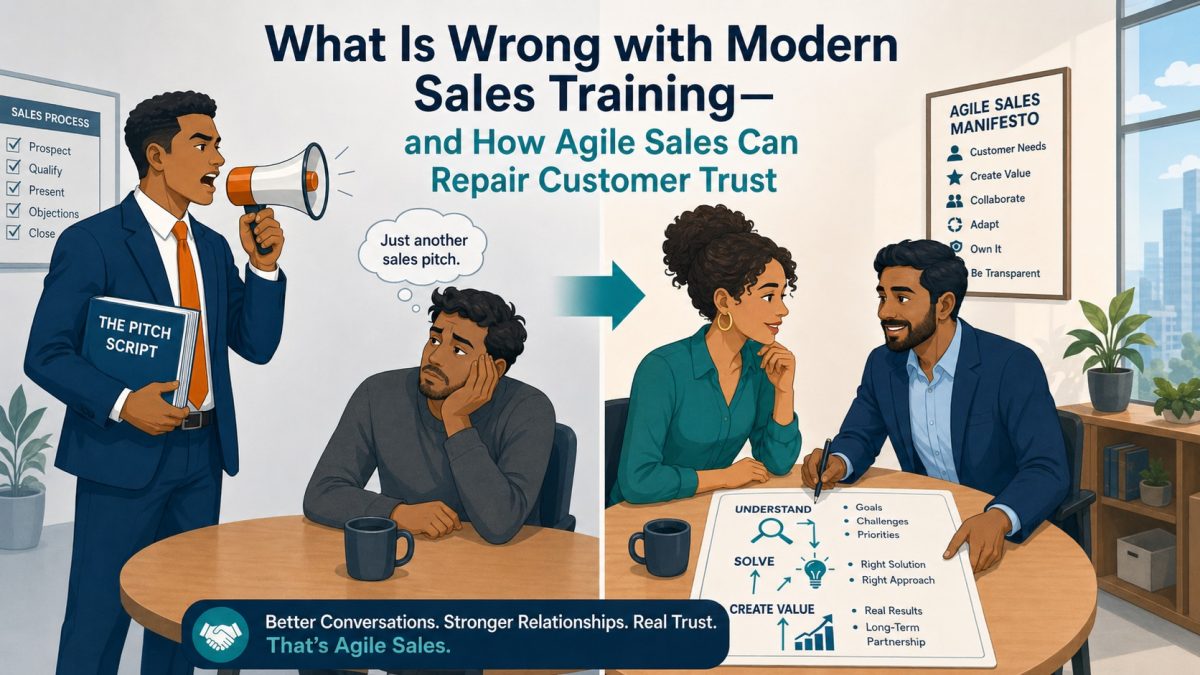
Central argument Much of modern sales training weakens customer trust when it teaches salespeople to manage, persuade, and move customers through a process instead of helping customers make better decisions. The Agile Sales Manifesto offers a better model because it reconnects sales with customer needs, value creation, transparency, adaptability, and accountability.

Modern sales training is not useless. At its best, it improves communication, confidence, discipline, pipeline organization, follow-up, and decision guidance. The problem is that many programs still carry an outdated assumption: the customer is someone to be moved through a process.

That assumption is increasingly harmful. Modern customers are informed, cautious, busy, and capable of checking claims quickly. They do not need more pressure. They need help making better decisions.

The Agile Sales Manifesto reframes sales as the discipline of creating value with customers. Its six values offer a practical trust-repair model for modern sales training.

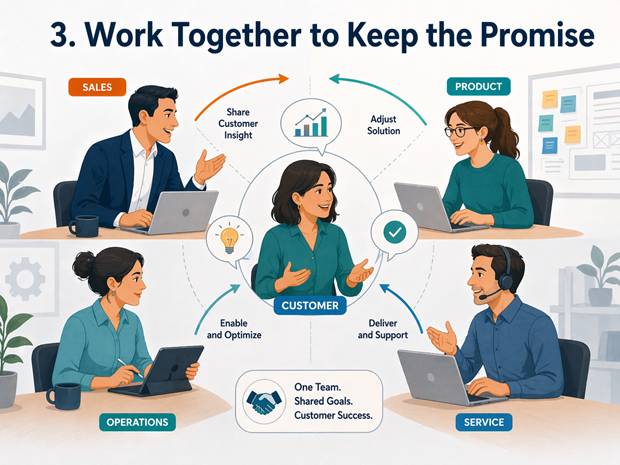
1. Customer Needs First Understand the customer’s reality before presenting the solution.2. Create Value, Not Closure Make the close the result of usefulness, not pressure.3. Keep the Promise Connect sales with delivery through cross-functional collaboration.
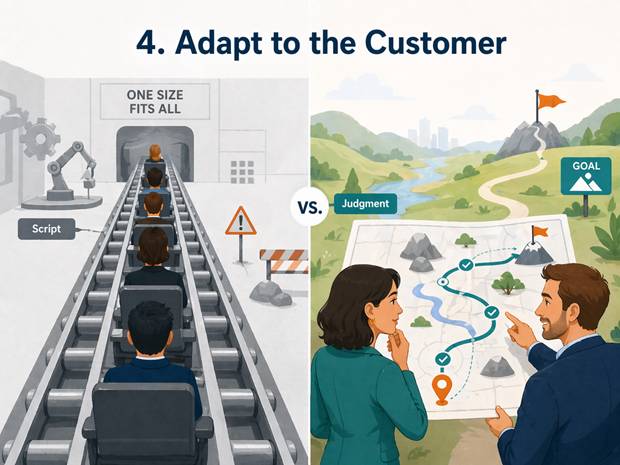
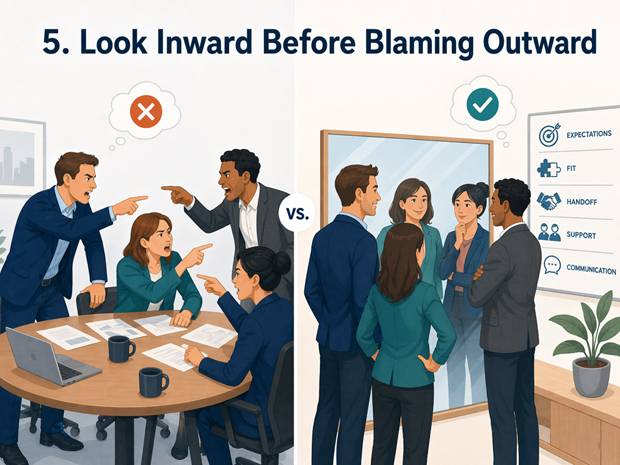
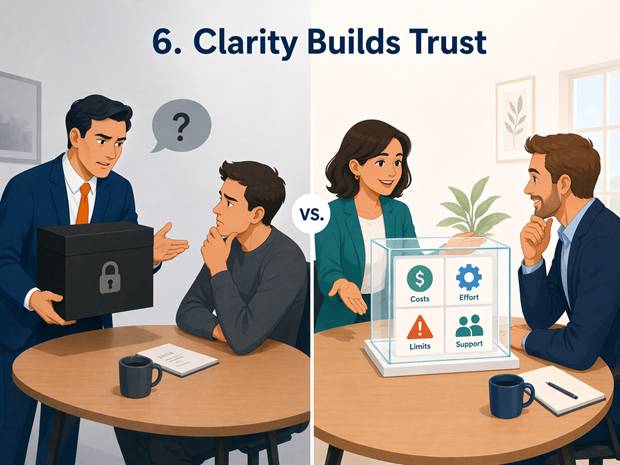
4. Adapt to the Customer Use process intelligently instead of forcing every customer into a script.5. Look Inward First Treat poor outcomes as learning signals before assigning blame.6. Clarity Builds Trust Explain costs, effort, limits, support, and tradeoffs clearly.

The Problem with Sales

Modern sales training is not useless. At its best, it helps salespeople communicate clearly, organize opportunities, understand customer needs, manage follow-up, and guide decisions with professionalism. Good sales training can improve confidence, discipline, and business performance.

The problem is that much of modern sales training still carries an outdated assumption: the customer is someone to be moved through a process.

That assumption is increasingly harmful. Modern customers are informed, cautious, busy, and capable of checking claims quickly. They can compare alternatives, read reviews, research competitors, watch demonstrations, speak with peers, and identify exaggeration before ever speaking to a salesperson. They do not need more pressure. They need help making better decisions.

This is where much of modern sales training falls short. It often teaches salespeople how to qualify, persuade, handle objections, create urgency, and close, but it does not always teach them how to earn trust. It can produce salespeople who sound polished but do not create enough value. It can reward confidence without credibility, activity without usefulness, and closing without accountability.

The issue is not that salespeople should stop selling. Businesses need revenue. Salespeople need structure. Customers often need guidance. Persuasion has a legitimate place in business. The problem begins when persuasion becomes disconnected from customer value.

The Agile Sales Manifesto offers a better path. It reframes sales not as the art of pushing customers toward agreement, but as the discipline of creating value with customers.

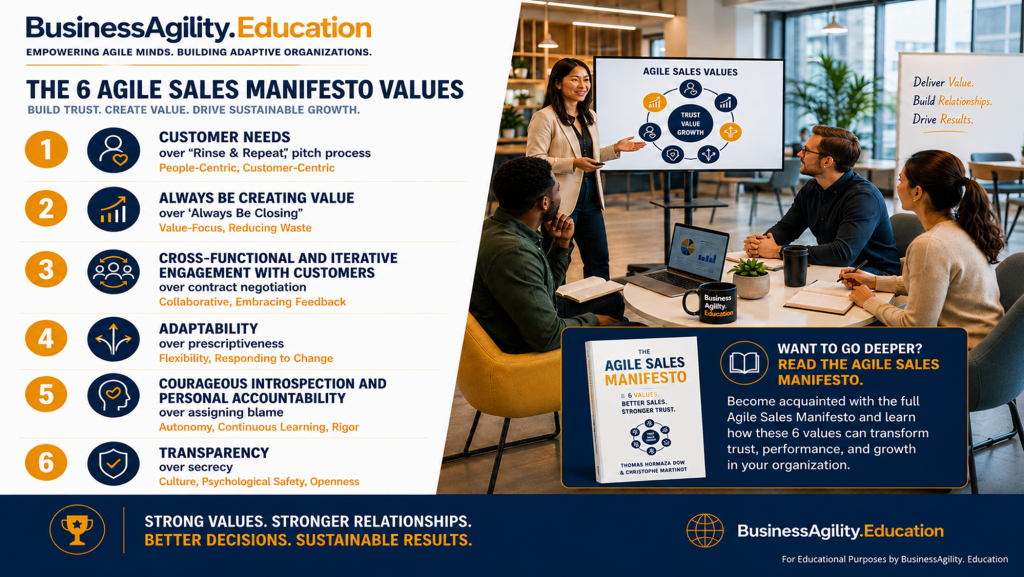
The six trust-repair values 1. Customer needs over “rinse and repeat” pitch process
2. Always be creating value over “Always Be Closing”
3. Cross-functional and iterative engagement with customers over contract negotiation
4. Adaptability over prescriptiveness
5. Courageous introspection and personal accountability over assigning blame
6. Transparency over secrecy

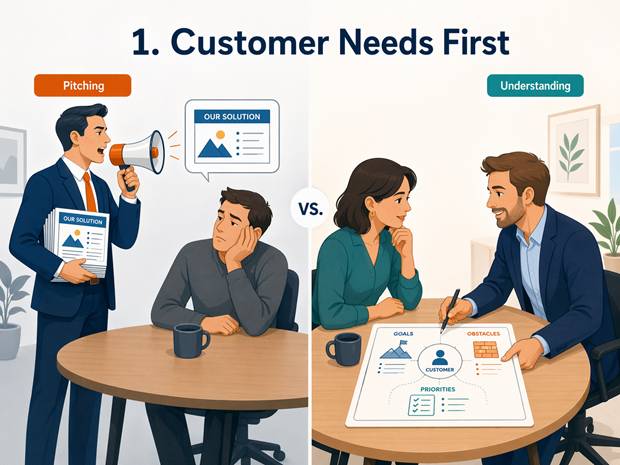
1. From Pitching at Customers to Understanding Their Reality

Agile Sales Value: Customer needs over “rinse and repeat” pitch process

The salesperson earns the right to present a solution by first understanding the customer’s world.

Trust-repair insight The salesperson earns the right to present a solution by first understanding the customer’s world.

The first weakness in much of modern sales training is that it teaches salespeople to begin with the pitch.

The salesperson learns the product, the features, the benefits, the ideal customer profile, the objections, and the closing language. Then the customer conversation becomes an attempt to match the customer to the prepared message.

That may be efficient for the company, but it can feel empty to the customer. A repeatable pitch assumes that the seller already knows what matters. Agile Sales begins from a different assumption: value cannot be created until the customer’s reality is understood.

The customer is not a blank space waiting for the company’s message. The customer has existing pressures, constraints, disappointments, goals, risks, internal politics, budget realities, and previous experiences with other sellers. If the salesperson does not understand that reality, the pitch may sound professional but still miss the point.

For example, a salesperson selling a customer relationship management platform should not begin by presenting dashboards, automation features, integrations, and case studies. Those things may matter eventually, but they are not the starting point. The better starting point is understanding whether the customer has clean data, disciplined follow-up habits, a clear sales process, trained staff, and leadership support. Without those conditions, the platform may not create value. It may simply become another expensive tool that the customer does not fully use.

This is the first repair that Agile Sales brings to modern sales training. It teaches salespeople to diagnose before prescribing. It asks them to earn the right to present a solution by first understanding the customer’s world.

A pitch can create attention. Understanding creates trust.

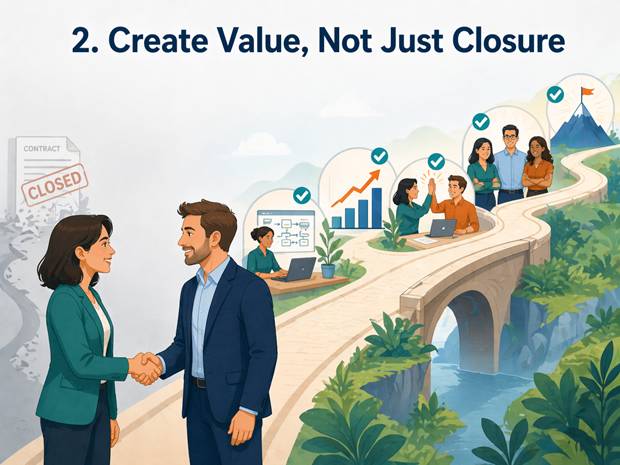
2. From Closing Pressure to Value Creation

Agile Sales Value: Always be creating value over “Always Be Closing”

The close becomes stronger when it is earned through usefulness.

Trust-repair insight The close becomes stronger when it is earned through usefulness.

The second major weakness in modern sales training is the obsession with closing.

Salespeople are often trained to move the customer toward commitment, ask for the sale, create urgency, overcome hesitation, and secure the next step. These skills are not automatically wrong. A salesperson who cannot guide a decision is not doing the job well.

The problem begins when closing becomes the center of the sales conversation. When the salesperson is too focused on closing, customer hesitation is treated as resistance. But hesitation often contains useful information. A customer may hesitate because the value is unclear, the timing is poor, the implementation risk is high, the budget is uncertain, or the internal decision process is more complex than the salesperson realizes.

If the salesperson rushes to “handle” the objection, they may miss the truth inside it. This value does not reject the close. It puts the close in the right place. Closing should be the result of value creation, not a substitute for it.

For example, when a customer says that a solution is too expensive, weak sales training may teach the salesperson to reframe the price, defend the return on investment, or create urgency around the offer. Agile Sales asks the salesperson to go deeper. The price concern may mean that the customer does not yet see enough value, that the solution is too large for the current need, or that the salesperson has not connected the solution to a business outcome that matters.

In that situation, the salesperson creates value by clarifying the business case, adjusting the recommendation, explaining tradeoffs, or even acknowledging that the timing is not right. That is not passive selling. It is better selling.

3. From Winning the Contract to Keeping the Promise

Agile Sales Value: Cross-functional and iterative engagement with customers over contract negotiation

The contract may close the sale, but delivery proves the truth of the relationship.

Trust-repair insight The contract may close the sale, but delivery proves the truth of the relationship.

The third weakness in modern sales training is that it often treats the signed deal as the finish line. This is one of the most dangerous assumptions in sales.

A salesperson can win the contract and still damage trust if the organization cannot deliver what was promised. The customer does not experience sales, marketing, product, operations, service, and leadership as separate internal departments. The customer experiences one business.

If marketing creates expectations that the product cannot meet, trust suffers. If sales promises implementation support that operations cannot provide, trust suffers. If customer service does not understand what was promised during the sales process, trust suffers. If leadership rewards short-term revenue but ignores customer disappointment, trust suffers.

This value shifts sales training away from contract obsession and toward promise-keeping. Salespeople must understand the full customer experience. They need to know what happens after the deal is signed. They need to understand onboarding, implementation, service limitations, common customer frustrations, delivery timelines, and the conditions required for success.

For example, a salesperson selling a digital transformation project should not treat the proposal as a neat package that can be handed off after signature. The salesperson should understand that success depends on leadership commitment, employee participation, data quality, internal communication, training, and change management. If those factors are ignored during the sale, the customer may later feel that the project was oversold.

Agile Sales asks salespeople to work across functions so the promise made in the sales conversation can actually be kept by the organization.

4. From Scripts and Formulas to Adaptive Judgment

Agile Sales Value: Adaptability over prescriptiveness

Scripts can help a salesperson begin. Adaptability helps a salesperson become useful.

Trust-repair insight Scripts can help a salesperson begin. Adaptability helps a salesperson become useful.

The fourth weakness in modern sales training is the excessive reliance on scripts, templates, talk tracks, formulas, and repeatable sequences.

Structure is useful. New salespeople need guidance. Teams need shared language. Organizations need consistency. But structure becomes a problem when it replaces judgment.

Customers can sense when a salesperson is following a formula. They notice when questions are asked mechanically. They notice when the response sounds rehearsed. They notice when the salesperson is trying to move them to the next stage instead of responding to what was actually said. That creates artificial professionalism. The salesperson sounds trained, but not necessarily trustworthy.

Adaptability does not mean selling without a process. It means using the process intelligently.

Two customers may be interested in the same product but need completely different conversations. One may need technical proof. Another may need financial justification. Another may need reassurance about implementation. Another may need help building internal support. Another may need the salesperson to slow down and explain the risks of doing nothing.

For example, a salesperson selling analytics software may meet one customer who already understands the technical value but needs help justifying the purchase to finance. Another customer may have budget but lacks reliable data. A third may have executive interest but weak operational readiness. The same product may be involved, but the sales conversation should not be the same.

This is why sales training must develop judgment, not just technique.

5. From Blame Shifting to Courageous Accountability

Agile Sales Value: Courageous introspection and personal accountability over assigning blame

A sales culture that learns from disappointment becomes more credible over time.

Trust-repair insight A sales culture that learns from disappointment becomes more credible over time.

The fifth weakness in modern sales training is that it often does not teach enough accountability.

Salespeople are usually trained for what happens before the sale: prospecting, discovery, presentation, objection handling, negotiation, and closing. They are trained to manage the pipeline, advance opportunities, and hit targets. But they are not always trained to examine their role when the customer experience goes wrong.

When a customer is disappointed, organizations often blame the customer for poor adoption, the service team for weak support, the product team for missing features, or the market for changing conditions. Sometimes those explanations may contain truth. But they should not become excuses. Sales must also look at itself.

This value asks salespeople and sales leaders to examine uncomfortable issues through a professional lens. Was the customer properly understood? Were expectations realistic? Were limitations explained? Was the implementation effort made clear? Were the right stakeholders involved? Was the deal a good fit, or was it forced because the number mattered?

For example, if a customer fails to get value from a platform, the sales team should not immediately conclude that the customer did not use it properly. The team should examine whether it assessed readiness, explained the work required, involved the right decision-makers, and clarified what success would demand from the customer’s side.

This kind of accountability is not weakness. It is how sales becomes more professional. A sales culture that cannot examine itself will keep repeating the same trust failures.

6. From Hidden Limitations to Radical Clarity

Agile Sales Value: Transparency over secrecy

Transparency is not the enemy of selling. In a low-trust market, transparency is one of the strongest forms of selling.

Trust-repair insight Transparency is not the enemy of selling. In a low-trust market, transparency is one of the strongest forms of selling.

The sixth weakness in modern sales training is that transparency is often treated as a risk.

Salespeople may avoid discussing limitations because they worry it will weaken the deal. They may delay difficult details until later in the process. They may simplify implementation challenges. They may avoid talking about hidden costs, service constraints, required customer effort, or tradeoffs.

This may help a deal move forward in the short term, but it creates problems later. Customers do not lose trust because a product has limitations. Every product has limitations. Customers lose trust when those limitations are hidden, minimized, or revealed too late.

Transparency does not mean overwhelming the customer with every possible detail. It means giving the customer the information needed to make a clear and responsible decision.

A transparent salesperson explains what the solution does well, where it is weaker, what implementation requires, what is included, what may cost more later, what support is available, and what tradeoffs should be considered.

For example, a consulting firm selling a business transformation project should not imply that the outside consultant alone can produce the result. A transparent salesperson explains that success also depends on leadership commitment, employee participation, internal communication, access to data, and the customer’s willingness to make decisions.

That honesty may make the sale more complex, but it makes the relationship more real.

The Strongest Objection: Salespeople Still Need to Sell

A reasonable objection is that salespeople cannot simply become advisors who avoid persuasion. Businesses need revenue. Salespeople need to guide decisions. Customers sometimes delay unnecessarily, misunderstand value, or avoid action even when change is necessary.

That objection is valid. Agile Sales does not mean passive selling. It does not mean avoiding the close. It does not mean letting customers wander endlessly through uncertainty. It does not replace business development with polite conversation.

Good sales still requires confidence, structure, timing, and the ability to help a customer move toward a decision. The difference is that Agile Sales places persuasion inside a value-creation discipline.

The salesperson can still challenge the customer, but the challenge must serve the customer’s outcome. The salesperson can still ask for commitment, but the commitment should follow from clear value. The salesperson can still guide the decision, but the guidance should be transparent, evidence-based, and connected to the customer’s real situation.

In other words, Agile Sales does not weaken selling. It professionalizes it.


The Agile Sales Manifesto as a Trust Repair Model

The six values of the Agile Sales Manifesto respond directly to the weaknesses of modern sales training.

Weakness in Modern Sales TrainingAgile Sales Manifesto Correction
Salespeople are trained to lead with the pitchCustomer needs over “rinse and repeat” pitch process
Salespeople are trained to push for the close too earlyAlways creating value over “Always Be Closing”
Salespeople are trained to win the contract, not always to protect deliveryCross-functional and iterative engagement with customers over contract negotiation
Salespeople are trained to follow scripts instead of using judgmentAdaptability over prescriptiveness
Sales cultures often blame customers, service, or product when outcomes failCourageous introspection and personal accountability over assigning blame
Salespeople are encouraged to hide limitations until laterTransparency over secrecy

What Better Sales Training Should Teach

Better sales training should still teach communication, discovery, negotiation, follow-up, and closing. Those skills matter. But they should be taught inside a stronger professional frame.

  • Understand a customer’s situation before recommending a solution.
  • Interpret objections instead of defeating them.
  • Explain tradeoffs honestly.
  • Recognize a bad-fit sale before it becomes a trust problem.
  • Collaborate with other departments before making promises.
  • Follow up in ways that create value rather than noise.
  • Remain accountable after the sale.
Key principle Trust is not a soft outcome. Trust is a business asset. When customers trust a salesperson, they share better information, discuss risks more openly, consider recommendations more seriously, return more often, and refer more confidently.

The Future of Sales Training Is Trust-Based

What is wrong with much of modern sales training is not that it teaches salespeople to sell. Selling is necessary. The problem is that it often teaches selling as a process of managing the customer rather than helping the customer make a better decision.

Customers lose trust when they feel pushed, processed, scripted, or manipulated. They gain trust when they feel understood, respected, informed, and supported.

The Agile Sales Manifesto helps because it gives sales training a better foundation. It shifts the focus from pitch to need, from closing to value, from contract to collaboration, from script to adaptability, from blame to accountability, and from secrecy to transparency.

This is not a softer version of sales, it is a more mature version of sales.

Agile Sales Training: Six Trust-Repair Values

PDF Agile Sales Training

Categories
Agile AI Sales Book

Agile Sales AI Video 2024

Q4 2024 YouTube Channel Overview for Professor Thomas Hormaza Dow

The final quarter of 2024 showcased significant achievements for your YouTube channel, underscoring your expertise in Agile Sales and AI-Assisted Selling. With 802 total hours of viewing time and 45,100 cumulative views, your content continued to provide in-depth insights into cutting-edge sales methodologies and AI integration. Here’s a closer look at your Q4 highlights:

Top-Performing Video

  • “Why I Wrote the ‘Agile Sales and AI-Assisted Selling’ Book” remained a cornerstone of your content strategy, leading Q4 with 38,152 views and an exceptional 84.7% average watch percentage. Its personal, value-driven storytelling resonated deeply, reinforcing your position as a thought leader in sales innovation.

Content Performance Highlights

  1. Educational Depth:
    • Chapter-focused videos maintained strong audience engagement, particularly:
      • “Agile Sales and AI-Assisted Selling Book Chapter 1: Traditional Sales Challenges” (2,222 views).
      • “Agile Sales, ABM & AI-Assisted Selling Practices” (1,246 views).
    • These videos demonstrated consistent interest in practical, actionable insights, aligning with your goal of making complex topics accessible for business professionals.
  2. Engagement Metrics:
    • Audience retention metrics reflected sustained viewer interest across key videos:
      • “AI Models in Sales: Practical Applications Explained” achieved a remarkable 86.9% watch-through rate.
      • “12 Steps for Quick Wins with Agility and AI Tools in Sales” retained 83.9% of viewers.
      • “Top AI Tools for Sales: Chapter 12 Part 6” saw an outstanding 98.6% watch-through.

Emerging Themes in Q4

  • AI-Driven Sales Insights: Content exploring AI’s transformative role in sales processes resonated strongly, especially videos emphasizing practical tools and ethical considerations.
  • Actionable Strategies: Your focus on delivering step-by-step guides and actionable frameworks continued to meet the needs of your professional audience.
  • Personal Connection: Story-driven videos, such as your reflections on writing the Agile Sales and AI-Assisted Selling book, highlighted the power of personal narratives to engage viewers.

Key Learnings from Q4

  • Videos combining personal insights with professional expertise yielded high engagement.
  • Short, focused content addressing specific challenges or tools performed exceptionally well.
  • Educational content remained a significant draw, with viewers seeking detailed, practical guidance.

Outlook for 2025

Q4’s momentum sets the stage for 2025 to further amplify your channel’s impact. Leveraging analytics, refining video formats, and maintaining a focus on educational depth and actionable insights will ensure continued growth and engagement with your audience.

Categories
Agile AI Sales Book

Agile Sales Book

Agile Sales Book Motivation

Author Motivation to Write this Book

Before I even started writing Agile Sales and AI-Assisted Selling, I had a question in the back of my mind: why is it that, in business, we intuitively understand what it means to say ‘leadership vs management’—it’s a state of being! What does it really mean to be a leader rather than a manager? And more specifically, what’s the equivalent in sales? What does it look like when someone isn’t just “in sales,” but living in a state of customer-centric value creation?

Here’s where I landed on the leadership vs. management piece: leadership is all about inspiration, vision, and people—it’s pushing people forward toward something bigger than the day-to-day grind. Management is more about keeping the trains running, making sure everything is organized, efficient, and hitting those all-important metrics. Leadership is about guiding people toward the why behind what they do, while management is about the how and what they do to achieve results.

So, how does this apply to sales? When we manage sales, we’re focused on the details—quotas, territories, metrics. We make sure the pipeline is flowing and people are doing the right activities. But just like leadership transcends management, there’s something bigger in sales: that’s customer-centricity or value creation.

In the same way leadership motivates people to aim for something beyond task completion, customer-centricity pushes salespeople beyond just making a sale. It’s about understanding the customer’s needs, creating long-term relationships, and consistently delivering value. It’s the reason why sales exist at all: to help the customer, not just to close a deal.

I see customer-centric value creation as the leadership equivalent in sales. Just as a leader drives a team toward a vision, a salesperson who embodies customer-centricity is driving toward building trust, adding value, and creating lasting relationships. They’re not just “doing sales tasks,” they’re operating on a higher level, focused on value creation as their primary goal.

In short, to be in a state of customer-centric value creation is to view sales as a relationship-building endeavor where the customer comes first, and everything is about creating meaningful, lasting value for them. It’s about being a leader in sales—not just hitting targets, but truly solving problems for customers and delivering real solutions.

While I was diving into these concepts for my book, another big motivation was to provide something useful and free for my students in college and university. I wanted them to have a resource that wasn’t just another textbook, but something practical they could use and apply in their careers. This whole exploration of leadership versus management, and the state of customer-centric value creation, is at the heart of what I wanted to give them: the tools to think bigger and go beyond the basics in their own sales and business journeys.

Thomas Hormaza Dow
Co-author, Agile Sales Manifesto

About the Book

What is Agile Sales? | Benefits of Agile Sales in Business | How to Implement Agile Sales

Welcome to the fast-paced, adaptable world of Agile Sales.

In today’s ever-evolving market, the days of rigid quotas, static strategies, and drawn-out sales cycles are giving way to a more dynamic approach: Agile Sales. Inspired by Agile project management, Agile Sales prioritizes adaptability, collaboration, and continuous improvement, allowing teams to respond quickly to customer feedback and market trends.

But what sets Agile Sales apart, and how can it transform your sales process?

The Core Principles of Agile Sales:

  1. Focus on Customer Value: Every step in Agile Sales is about delivering value to the customer. This value-driven mindset leads to more personalized sales strategies, where AI-assisted tools can help identify data-driven solutions that align with customer needs. You can find more details on how this focus on value integrates with AI tools in Chapter 5: Eight-Step Agile Sales and AI-Assisted Selling Process, which discusses the principle of Customer-Centric Value Creation.
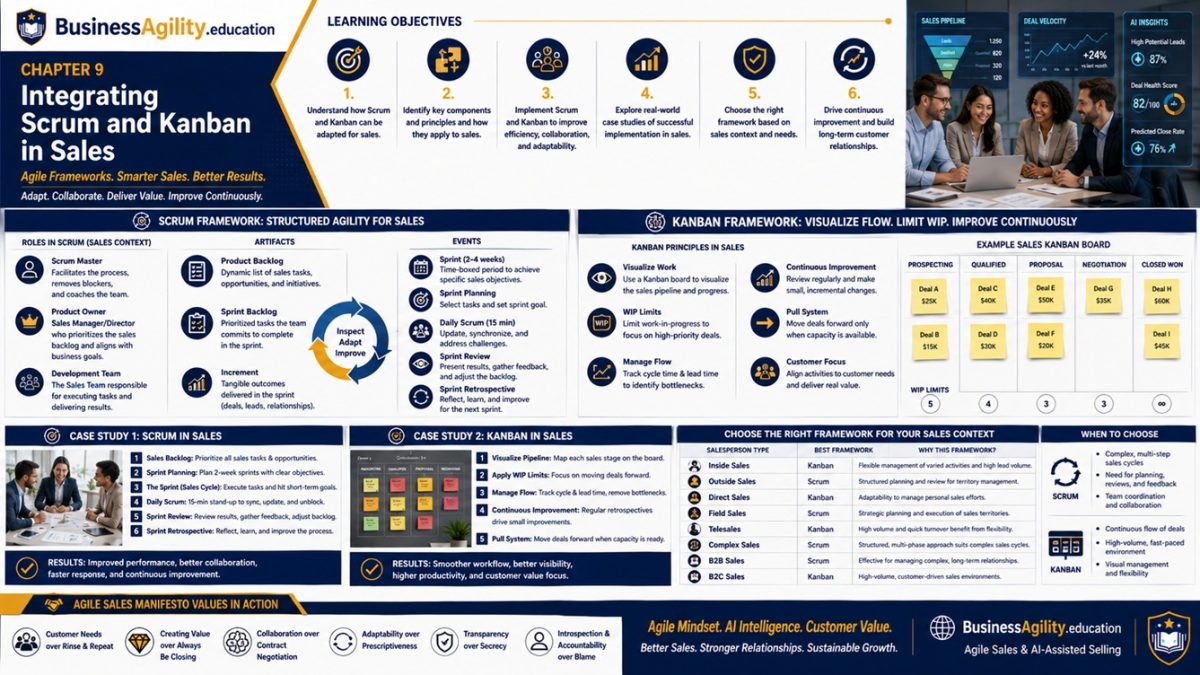
  2. Iterative Sales Cycles: Traditional sales often follow long cycles, but Agile Sales breaks these down into short, focused sprints. During each sprint, teams gather real-time feedback, test new strategies, and make adjustments. This iterative process enables sales professionals to adapt on the fly, improving the customer experience with each interaction. For more insights on the importance of iterative cycles in sales, see Chapter 9: Scrum and Kanban in Sales.
  3. Cross-Functional Collaboration: Agile Sales is about breaking down silos. Sales teams work in sync with marketing, product development, and customer service, creating a unified team effort. This holistic approach ensures that all departments are aligned toward the common goal of customer satisfaction. The benefits of cross-functional teams are explored in Chapter 10: Agile Sales Leadership and Team Building, where it emphasizes the importance of inter-department collaboration.
  4. Customer-Centric Approach: The customer is at the heart of Agile Sales. From the initial outreach to the final follow-up, sales strategies evolve based on customer behaviors and preferences. This approach not only builds loyalty but ensures sales teams are always one step ahead in anticipating customer needs. For a deeper dive into this, Chapter 5 outlines how customer-centric strategies shape the entire agile sales process.
  5. Data-Driven Adjustments: Agile Sales relies heavily on performance metrics. Data collection and analysis are embedded into every sprint, allowing teams to track key indicators like lead conversion rates, customer satisfaction, and sales velocity. These insights inform adjustments, making the process smarter and more responsive with each iteration. Chapter 5 also discusses how AI tools enhance data-driven decision-making in each step of the sales process.

The Benefits of Agile Sales:

  1. Increased Adaptability: In a world where customer preferences and market conditions shift rapidly, Agile Sales enables teams to pivot quickly. Whether it’s a new customer demand or an emerging trend, Agile Sales keeps your team agile—always ready to seize new opportunities. This benefit is discussed in Chapter 9, which focuses on how Agile frameworks like Scrum and Kanban help teams stay flexible.
  2. Enhanced Customer Satisfaction: By delivering personalized, value-driven solutions in real time, sales teams build stronger customer relationships. The adaptability of Agile Sales means that customers feel heard, valued, and understood—leading to higher satisfaction and loyalty. Chapter 10 expands on how customer satisfaction is boosted through continuous engagement and feedback.
  3. Greater Team Collaboration: Agile Sales fosters a culture of collaboration. Sales professionals no longer work in isolation but operate in close connection with marketing, product, and customer support teams. This synergy not only improves the customer experience but also drives innovation within the sales process. See Chapter 10 for how collaboration between teams enhances both sales efficiency and innovation.
  4. Better Resource Allocation: Agile Sales eliminates wasted effort. Instead of chasing outdated strategies, teams focus on activities that create real value. This optimization of resources leads to a better ROI and ensures that sales teams remain lean and efficient. This principle of maximizing value is emphasized in Chapter 5, where resource allocation is tied to customer-centric goals.
  5. Continuous Learning and Improvement: With regular sprints and retrospectives, Agile Sales promotes a cycle of continuous learning. Sales teams regularly reflect on what worked, what didn’t, and how they can improve in the next sprint—creating a culture of constant innovation and growth. The importance of learning and iterative improvement is highlighted in Chapter 9.

How to Implement Agile Sales in Your Organization:

  1. Choose the Right Framework: Agile Sales can be structured using frameworks like Scrum or Kanban, which are covered extensively in Chapter 9. Scrum helps teams work in short, structured sprints, while Kanban focuses on optimizing workflow for teams that require constant adaptability.
  2. Assemble Cross-Functional Teams: Agile Sales thrives on diverse skill sets. Create cross-functional teams that integrate sales, marketing, product development, and customer service. This ensures a holistic, 360-degree approach to the customer journey, where every department has a stake in the outcome. For tips on creating effective cross-functional teams, refer to Chapter 10: Agile Sales Leadership and Team Building.
  3. Define Your Sprints and Sales Backlog: Break large sales targets into manageable tasks. Prioritize activities in a sales backlog based on the value they deliver to customers, then execute these tasks in sprints that typically last between 1-4 weeks. Chapter 5 explains how to structure your sales backlog based on customer needs and Agile principles.
  4. Embrace Data and Feedback: In Agile Sales, data is your compass. Track metrics such as time-to-close, customer feedback, and lead conversion rates. By using AI tools to analyze this data, sales teams can fine-tune their strategies, ensuring that each sprint is smarter and more aligned with customer needs. Chapter 5 discusses how AI enhances data analysis and customer feedback loops in Agile Sales.
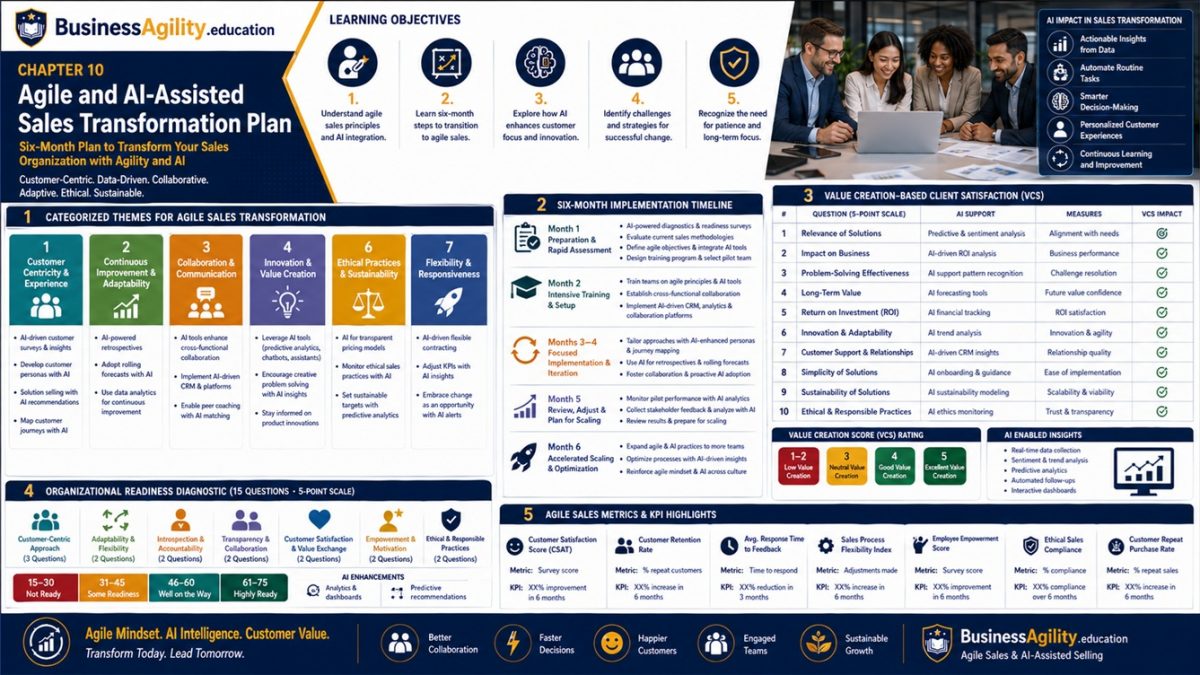
  5. Start Small and Scale Gradually: Agile Sales isn’t a revolution overnight. Begin with a pilot project or a small team, integrating Agile principles gradually. As your team becomes more comfortable, scale Agile practices across the organization, expanding the use of AI tools and collaborative frameworks to optimize the sales process. The gradual implementation process is outlined in Chapter 10’s six-month deployment plan for transitioning to an Agile Sales model.
Categories
Agile AI Sales Book

Advice for Agile Sales Coaches and AI Experts

26-Week Agile Sales Coach Intervention: Transforming Sales with Agile & AI

Sales organizations must remain agile and adaptive to meet the ever-evolving needs of customers. This 26-week intervention plan aims to systematically guide your sales organization through a transformation to an Agile Sales model, enhanced by AI tools. The goal is to align with customer needs, leverage data-driven decision-making, and achieve sustainable long-term improvements. Below is a detailed breakdown of each phase of the transformation journey, from initial diagnostics to long-term strategy development.

Learning Objectives:

  1. Understand the key principles of Agile Sales and how AI tools enhance sales processes.
  2. Learn how to assess organizational readiness for Agile Sales transformation and AI integration.
  3. Develop practical skills in implementing Agile methodologies, such as Scrum and Kanban, within sales environments.
  4. Discover how to build a continuous improvement culture by leveraging iterative feedback and data-driven decision-making.
  5. Master strategies for integrating cross-functional collaboration, ensuring the seamless alignment of sales, marketing, customer service, and operations.
  6. Explore the long-term role of AI in sales, including predictive analytics, AI-driven customer engagement, and governance frameworks for ethical AI use.

Phase 1: Diagnostic & Preparation (Weeks 1-4)

The first phase focuses on diagnosing the current state of the organization and preparing for a smooth transition. Key activities include:

  • Organizational and Customer Diagnostics: Use tools like the Agile Sales Transformation Readiness (ASTR) and Value Creation Survey (VCS) to assess internal sales processes and gather customer feedback. This will help pinpoint areas for improvement and prioritize customer-centric changes.
  • Leadership Alignment: Host strategy workshops with senior leaders to co-create a transformation vision, ensuring alignment with broader organizational objectives. Define clear roles and responsibilities, appointing Agile coaches and AI champions.
  • AI Readiness Assessment: Conduct a technology audit and identify opportunities where AI tools, such as predictive analytics and chatbots, can be integrated to optimize sales processes.
  • Change Management Plan: Develop a communication strategy and identify change champions who will advocate for the new Agile and AI-driven processes.

Phase 2: Initial Training & Pilot Implementation (Weeks 5-8)

In this phase, focus on building foundational knowledge within the sales team and running a pilot program.

  • Agile Sales and AI Training: Design a training program to introduce Agile frameworks like Scrum and Kanban, alongside AI-assisted selling tools such as CRM data analytics and predictive analytics.
  • Pilot Program Design: Select a pilot team and apply the Eight-Step Agile Sales Framework, integrating AI tools for lead scoring and customer engagement.
  • Tool Integration: Develop a roadmap for integrating AI into CRM systems and automating workflows, such as automated follow-ups and lead scoring.
  • Metrics for Success: Define key performance indicators (KPIs) such as customer satisfaction (CSAT), sales velocity, and conversion rates to evaluate the pilot program’s success.

Phase 3: Iteration & Expansion (Weeks 9-16)

This phase focuses on iterating based on pilot feedback and expanding Agile practices across the organization.

  • Iterative Feedback Loops: Hold bi-weekly retrospectives to refine Agile processes and AI tool usage based on data-driven feedback.
  • Broaden Implementation: Gradually roll out Agile Sales practices to additional teams, tailoring AI models for specific sales regions or profiles.
  • Continuous Training: Provide advanced workshops and peer-learning opportunities to deepen the team’s Agile expertise.
  • Leadership Coaching: Conduct Agile leadership seminars, emphasizing the importance of fostering a culture of team autonomy and accountability.

Phase 4: Integration with Other Departments & Scaling (Weeks 17-24)

Seamlessly integrating Agile Sales practices across departments is the key focus in this phase.

  • Cross-Functional Collaboration: Host joint workshops to align sales, marketing, customer service, and operations teams. Customer journey mapping will help streamline collaboration and improve customer experience.
  • AI Tool Refinement: Retrain AI models based on pilot data and optimize automated workflows to reduce manual work and improve response times.
  • Organizational Diagnostics: Reassess the organization’s progress using the ASTR and VCS tools, adjusting strategies based on mid-term diagnostic insights.
  • Scaling Strategy: Create a roadmap for expanding Agile Sales practices organization-wide, ensuring ongoing communication and addressing any resistance to change.

Phase 5: Continuous Improvement & Long-Term Strategy (Weeks 25-26)

In the final phase, embed Agile and AI practices into the organization’s DNA for continuous adaptation and growth.

  • Post-Implementation Review: Analyze performance against KPIs, document lessons learned, and identify opportunities for future improvements.
  • Continuous Learning Culture: Establish learning communities where teams can share insights and discuss challenges in adapting Agile Sales practices.
  • Long-Term AI Strategy: Explore emerging AI technologies such as NLP and virtual assistants, while developing an AI governance framework that ensures transparency, ethical use, and data privacy.
  • Leadership Development: Implement ongoing leadership programs focused on adaptive leadership and strategies for fostering innovation in sales.

Conclusion

The 26-week Agile Sales Coach Intervention offers a structured approach to transforming your sales organization into an agile, customer-centric powerhouse, enhanced by AI tools. By following this plan, sales teams can achieve sustainable, long-term success while remaining responsive to the ever-changing business landscape. Agile Sales practices combined with AI not only streamline processes but also drive deeper customer engagement and data-driven decision-making, setting the foundation for future growth and innovation.

Categories
Agile AI Sales Book

Agile AI Sales Book Chapter 12

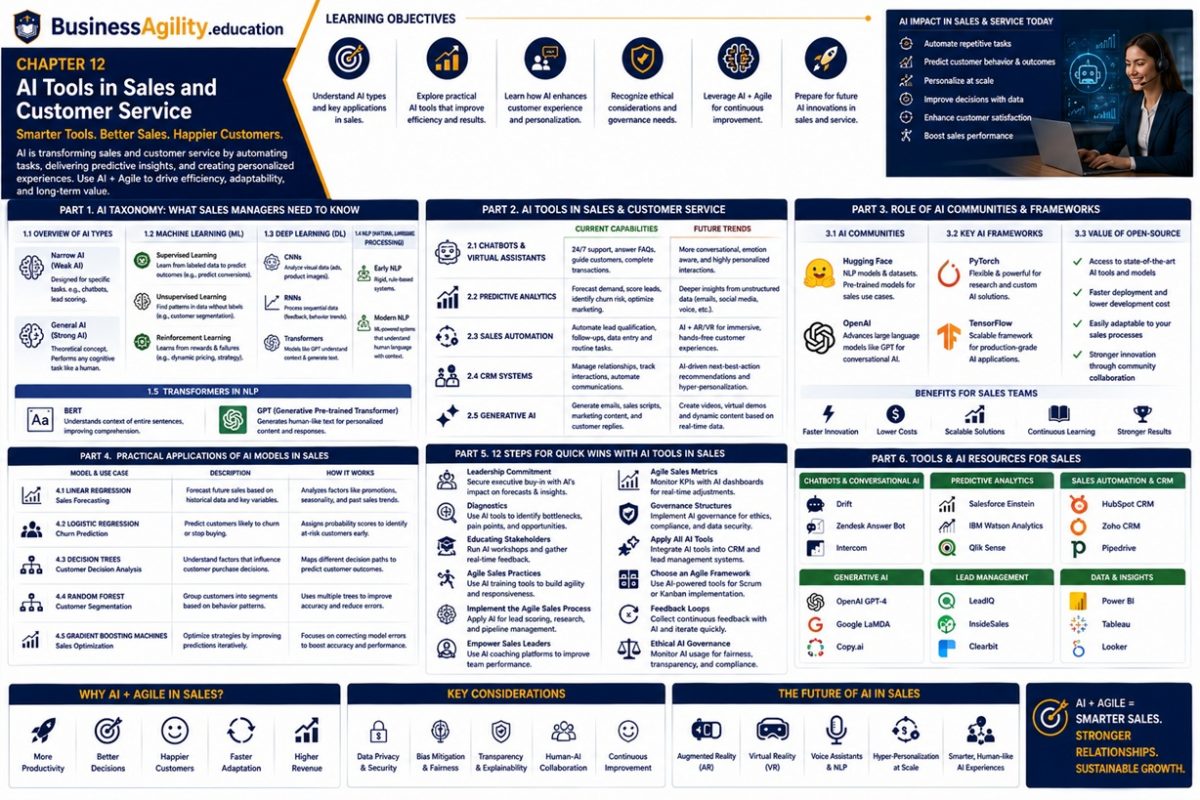
Introduction: AI Tools in Sales and Customer Service—Current and Future

Artificial Intelligence (AI) is transforming sales and customer service operations by automating routine tasks, generating predictive insights, and enhancing customer engagement. AI tools like chatbots, predictive analytics, and Customer Relationship Management (CRM) systems are helping sales teams work more efficiently while providing highly personalized experiences for customers. These technologies have become essential components of modern sales strategies, allowing businesses to meet customer expectations and keep up with rapidly evolving market trends.

As AI continues to develop, future innovations such as augmented reality (AR), virtual reality (VR), and voice assistants will introduce more immersive and human-like experiences into the sales process. AI is no longer a peripheral tool but a core component of sales optimization, offering predictive models, data-driven insights, and automated processes that streamline customer interactions. In this blog, we will dive into six key areas to help sales managers understand the current applications and future trends of AI in sales and customer service, while also explaining how to integrate these technologies into agile business practices for more responsive and efficient sales strategies.


PART 1. AI Taxonomy: What Sales Managers Need to Know

What is Artificial Intelligence?

Artificial Intelligence is a broad field of computer science focused on creating machines capable of performing tasks that typically require human intelligence. AI has a broad scope of applications, from simple automation to complex decision-making systems. For sales managers, understanding AI’s taxonomy—its categories and capabilities—can help in making informed decisions about how to leverage AI tools.

1.1 Overview of AI Types

AI is typically divided into two categories:

  • Narrow AI (Weak AI): This form of AI is designed for specific tasks, such as automating responses via a chatbot or processing sales data for insights. Narrow AI is highly focused and excels in specific applications such as lead generation or customer segmentation.
  • General AI (Strong AI): Still a theoretical concept, General AI would be able to perform any cognitive task that a human can do. While we are still far from achieving General AI, future advancements may create AI systems that handle a broad array of sales tasks with human-like flexibility and adaptability.

1.2 Machine Learning (ML)

Machine Learning, a subset of AI, involves training machines to learn from data and improve over time. It’s commonly used in sales for tasks such as lead scoring, churn prediction, and recommendation engines.

  • Supervised Learning: In this approach, the AI is trained with labeled data to make predictions. In sales, it can be used to predict customer behavior based on historical data, such as the likelihood of a customer making a purchase.
  • Unsupervised Learning: AI learns from unstructured data without human supervision, making it ideal for segmenting customers based on behavior patterns, demographics, or purchasing habits.
  • Reinforcement Learning: This method involves the AI system improving its decision-making by learning from successes and failures. It’s useful for optimizing dynamic pricing or improving marketing strategies in response to customer feedback.

1.3 Deep Learning (DL)

Deep Learning, a more advanced subset of ML, involves neural networks that mimic the human brain’s structure to process complex data. Deep learning models can recognize patterns in large data sets, making them highly useful in sales for tasks such as customer sentiment analysis and forecasting future sales trends.

  • Convolutional Neural Networks (CNNs): Ideal for analyzing visual data such as customer interaction with advertisements or product images.
  • Recurrent Neural Networks (RNNs): Used for processing sequential data, RNNs are particularly effective for analyzing customer feedback or identifying trends in purchasing behavior.
  • Transformer Models: These models, such as GPT (Generative Pre-trained Transformer), are revolutionizing the way machines handle language, enabling AI systems to engage in more natural conversations with customers.

1.4 Natural Language Processing (NLP)

Natural Language Processing enables machines to understand and respond to human language. NLP is crucial in sales for automating customer service interactions, analyzing sentiment from customer feedback, and generating responses that feel natural and human-like.

  • Early NLP Systems: Relied on rigid, rule-based approaches that were often ineffective at handling complex human language.
  • Modern NLP Systems: Now use machine learning to process large datasets, providing much more accurate and flexible language understanding.

1.5 Transformers in NLP

Transformers, particularly models like BERT and GPT, have transformed the field of NLP by allowing machines to understand the context of conversations and generate human-like text.

  • BERT: Helps AI systems understand the subtleties of customer interactions by processing the context of entire sentences, not just individual words.
  • GPT: This model is focused on generating text, making it useful for creating personalized marketing content or responding to customer inquiries in real-time.

PART 2. AI Tools in Sales and Customer Service: Comprehensive Guide for Sales Managers

2.1 Chatbots and Virtual Assistants

AI-powered chatbots and virtual assistants like ChatGPT, Google’s Dialogflow, and IBM Watson Assistant are revolutionizing customer service by providing 24/7 support, answering common inquiries, and guiding customers through sales processes.

  • Current Capabilities: Chatbots can handle basic customer questions, help customers navigate product options, and even complete transactions.
  • Future Trends: As AI technology evolves, chatbots will become even more conversational and personalized, understanding customer emotions and adjusting their responses accordingly.

2.2 Predictive Analytics

Predictive analytics tools like Salesforce Einstein, Microsoft Azure ML, and IBM Watson Analytics analyze historical data to forecast future customer behaviors and trends. These tools are invaluable for sales teams seeking to anticipate customer needs and make proactive decisions.

  • Current Capabilities: Predictive analytics helps sales teams identify which leads are most likely to convert, which customers are at risk of churning, and which marketing strategies are most effective.
  • Future Trends: Future versions of these tools will become more adept at analyzing unstructured data, such as customer emails and social media posts, to provide even deeper insights.

2.3 Sales Automation

Sales automation tools like HubSpot CRM and Zoho CRM automate repetitive tasks, allowing sales teams to focus on more strategic activities.

  • Current Capabilities: Automating tasks such as lead qualification, follow-ups, and data entry can significantly enhance sales team efficiency.
  • Future Trends: The integration of AI with AR/VR technologies will allow sales teams to create immersive, hands-free experiences for customers, further streamlining the sales process.

2.4 Customer Relationship Management (CRM) Systems

CRM platforms like Salesforce and Zoho serve as central hubs for tracking customer interactions and managing relationships. AI integration allows these systems to become smarter, providing sales teams with actionable insights.

  • Current Capabilities: CRMs help sales teams manage customer relationships, track interactions, and automate follow-ups.
  • Future Trends: AI-driven CRMs will provide next-best-action recommendations and automate personalized customer communications based on predictive models.

2.5 Generative AI

Generative AI tools like GPT-X can create personalized marketing content, sales scripts, and customer responses at scale.

  • Current Capabilities: These tools generate high-quality content for emails, advertisements, and customer service interactions.
  • Future Trends: Generative AI will eventually produce even more dynamic content, such as videos and virtual product demonstrations, based on real-time customer data.

PART 3. Role of AI Communities and Frameworks in Sales and Customer Service

3.1 Understanding AI Communities

AI communities such as Hugging Face and OpenAI are pivotal in advancing AI technologies by providing accessible resources and fostering collaboration among developers, data scientists, and businesses. These communities enable sales teams to leverage cutting-edge AI tools without needing deep technical expertise.

  • Hugging Face: Specializes in NLP models, providing pre-trained models that can be fine-tuned for specific customer service tasks like sentiment analysis and personalized responses.

3.2 Key AI Frameworks

AI frameworks like PyTorch and TensorFlow are the engines behind many AI models used in sales today. They allow businesses to build and deploy AI solutions that handle everything from customer segmentation to sales forecasting.

  • PyTorch: Known for its flexibility, making it ideal for research and development in customer service applications.
  • TensorFlow: A more scalable option for businesses seeking to integrate AI into large-scale sales operations.

3.3 The Value of Open-Source AI Frameworks

Open-source frameworks, such as the Transformers library from Hugging Face, offer businesses access to powerful AI tools without requiring a massive investment in custom development. These frameworks can be easily adapted to specific sales processes, speeding up the deployment of AI solutions.


PART 4. Practical Applications of AI Models in Sales

4.1 Linear Regression for Sales Forecasting

Linear regression models are widely used in sales to forecast future trends based on historical data. This allows sales managers to plan for upcoming periods, allocate resources, and set realistic targets.

  • How It Works: By analyzing variables like promotional spending, seasonal demand, and past sales, linear regression models provide a clear picture of what to expect in terms of future sales.

4.2 Logistic Regression for Churn Prediction

Logistic regression models are used to predict customer churn by analyzing factors such as purchase frequency, customer service interactions, and satisfaction levels. This enables sales teams to focus retention efforts on at-risk customers.

  • How It Works: By assigning a probability score to each customer, sales teams can identify those most likely to stop buying and proactively reach out with personalized retention strategies.

4.3 Decision Trees for Customer Decision Analysis

Decision tree models help sales teams understand the factors that influence customer purchasing decisions. By mapping out possible decision pathways, sales teams can tailor their strategies to better meet customer needs.

  • How It Works: Each branch of the decision tree represents a different customer decision pathway, allowing sales reps to adjust their approach based on the most likely outcome.

4.4 Random Forest for Customer Segmentation

Random forest models are used to improve customer segmentation by analyzing large datasets to identify patterns and group customers based on similar behaviors. This allows for more targeted marketing and sales efforts.

  • How It Works: By creating multiple decision trees and aggregating their results, random forest models provide more accurate segmentation, allowing sales teams to focus on the most valuable customer groups.

4. 5 Gradient Boosting Machines for Sales Optimization

Gradient boosting models refine predictive models by focusing on areas where previous models performed poorly. In sales, this can help optimize strategies for improving conversion rates and overall performance.

  • How It Works: By incrementally improving the model’s predictions, gradient boosting helps sales teams identify subtle patterns that lead to significant improvements in performance.

PART 5. 12 Steps for Quick Wins with AI Tools in Sales

Step 1: Leadership Commitment

Engage executives early on by demonstrating AI’s impact on sales forecasts and customer insights, securing buy-in for future AI initiatives.

Step 2: Diagnostics

Use AI-powered tools like IBM Watson to conduct internal diagnostics, quickly identifying bottlenecks and customer pain points.

Step 3: Educating Stakeholders

Host AI workshops with interactive feedback tools to engage stakeholders and speed up the adoption of AI across sales teams.

Step 4: Agile Sales Practices

Introduce AI-enhanced sales training platforms to give real-time feedback and improve the team’s agility in responding to market shifts.

Step 5: Implement the Agile Sales Process

Leverage AI tools for lead scoring and research to enhance each step of the sales process, from prospecting to closing.

Step 6: Empower Sales Leaders

Provide AI-based coaching platforms to help sales leaders monitor team performance and improve coaching methods based on real-time data.

Step 7: Agile Sales Metrics

Use AI dashboards to track key performance indicators like sales velocity and lead conversion in real-time, enabling quick adjustments.

Step 8: Governance Structures

Set up AI-driven governance tools to ensure ethical AI usage and compliance with data regulations.

Step 9: Apply All AI Tools

Integrate AI tools into CRM and lead management systems to optimize resource allocation and improve sales pipeline management.

Step 10: Choose an Agile Framework

Use AI-powered project management tools to implement Scrum or Kanban frameworks, enhancing team efficiency and performance.

Step 11: Feedback Loops

Implement AI-driven feedback tools to collect continuous insights from customers and sales teams, fostering a culture of continuous improvement.

Step 12: Ethical AI Governance

Ensure that all AI tools and processes are in line with ethical standards, using AI-based monitoring tools to flag any potential issues.


PART 6. Tools and AI Resources for Sales

Here’s a selection of some of the best AI tools available for sales teams:

  • Chatbots: Tools like Drift and Zendesk’s Answer Bot automate customer interactions, providing personalized assistance and freeing up sales teams for more complex tasks.
  • Predictive Analytics: Salesforce Einstein, IBM Watson, and Qlik offer predictive insights into customer behaviors, enabling proactive sales strategies.
  • Sales Automation: HubSpot and Zoho CRM automate data entry, lead management, and follow-ups, improving efficiency and productivity.
  • Generative AI: Tools like GPT-4 from OpenAI and LaMDA from Google help generate personalized sales scripts and marketing content, improving customer engagement.
  • Lead Management: LeadIQ and InsideSales provide AI-driven insights into lead qualification and prioritization, optimizing sales efforts.

By understanding AI taxonomy, leveraging the right tools, and participating in AI communities, sales managers can significantly enhance their teams’ efficiency and effectiveness. Practical AI applications in sales, from predictive analytics to customer segmentation, allow businesses to optimize their strategies, improve customer interactions, and achieve better results.

Categories
Agile AI Sales Book

Sales Executive Job Outlook 2025

Job Market Forecast for Sales Executives in Canada in 2025 remains strong, even amidst some economic uncertainties. Here’s an overview of key trends, demand, popular industries, emerging skills, and potential growth areas:

Demand for Sales Executives: Sales and marketing roles continue to see solid demand, driven by companies’ needs to adapt to digital-first strategies and engage with customers effectively. While hiring has slowed slightly due to economic conditions, sectors like technology, digital marketing, and finance still need skilled sales professionals to navigate evolving market conditions.

Popular Industries: Sales Executives have opportunities across a range of industries, notably in technology, retail, finance, and B2B services. The digital transformation of businesses has highlighted the importance of sales roles that support software, cloud services, and data analytics. E-commerce and digital-first consumer brands are also key areas of growth, as they continue to expand their market reach.

Emerging Skills: Employers are increasingly seeking Sales Executives with proficiency in digital tools, such as CRM platforms, and the ability to analyse data for customer insights. Soft skills like effective communication, relationship-building, and problem-solving remain crucial, while knowledge of AI and automation tools is becoming a competitive advantage.

Agile Sales and AI-Assisted Selling Outlook 2025

Growth Areas for the Next 2-3 Years

Remote and Hybrid Selling: The shift towards remote and hybrid work environments continues, with many organizations offering these options to attract talent. Sales Executives who are skilled in virtual client management and digital communication tools will have a competitive edge.

AI Integration: The rise of generative AI and automation in sales processes offers opportunities for roles that focus on AI-assisted selling and data-driven decision-making. These skills can be a differentiator for Sales Executives aiming to stay ahead of market trends. Explore more on this at Canada Hires​.

Customer-Centric Selling: The emphasis on delivering personalized experiences means that demand for Sales Executives who can leverage customer insights to tailor engagement strategies is likely to increase. This is particularly significant in sectors such as e-commerce and B2B sales.

Despite a potentially moderate economic outlook, Sales Executives with advanced digital skills and the ability to adapt to technological advancements will find opportunities in this evolving market. For a more comprehensive analysis, see more reports on Indeed Trends, Canada Hires and Randstad’s Insights.

References

https://canadahires.com/blog/canadas-2024-job-market-forecast-key-skills-and-booming-industries

https://ca.indeed.com/leadershiphub/jobs-and-hiring-trends-report-canada

https://www.randstad.ca/job-seeker/career-resources/career-development/trending-job-skills

Photo by Tamarcus Brown

Categories
Agile AI Sales Book

Agile AI Sales Book Chapter 10

PART 1: Six-Month Agile and AI-Assisted Sales Transformation Plan

Introduction: The Evolution of Sales Management

Sales organizations must adapt to more agile methodologies and embrace AI tools to enhance efficiency, customer focus, and innovation. Chapter 10 of Agile Sales and AI-Assisted Selling focuses on a six-month transformation plan, guiding sales organizations to shift toward agile models integrated with AI-assisted selling tools.

By adopting this plan, sales leaders can align more closely with customer needs, foster cross-functional collaboration, and continuously improve processes. AI plays a crucial role in this transformation by providing actionable insights, automating repetitive tasks, and driving smarter decision-making. This blog post outlines a step-by-step guide to implementing the plan, the benefits of integrating AI, and the key learning objectives.

Learning Objectives:

  • Understand the core principles of Agile Sales and how they can be integrated with AI-assisted selling.
  • Learn the steps to transition a sales organization to an agile model over six months.
  • Explore how AI tools can enhance customer-centricity, continuous improvement, and innovation in sales.
  • Identify the key challenges and strategies for successful implementation of Agile Sales with AI assistance.
  • Recognize the importance of patience and long-term focus in transforming sales processes.

Categorized Themes for Agile Sales Transformation

To ensure a successful transformation, the six-month plan is broken down into categorized themes that focus on specific aspects of agile sales.

1. Customer Centricity and Experience

  • Ask Your Customer: Use a value creation-based client satisfaction survey, enhanced by AI-assisted analysis, to capture customer feedback. AI can help process and analyze data more efficiently, revealing actionable insights.
  • Develop Customer Personas: Leverage AI-driven analytics to create and refine detailed customer personas. These personas provide a deep understanding of customer preferences, behaviors, and needs, allowing for more personalized selling approaches.
  • Engage in Solution Selling: AI-assisted tools can help identify customer pain points and suggest tailored solutions, improving the relevance of sales interactions.
  • Map Customer Journeys: AI-powered journey mapping tools provide an overview of customer touchpoints, helping to ensure a seamless and personalized experience throughout the sales cycle.

2. Continuous Improvement and Adaptability

  • Institute Regular Retrospectives: AI tools can analyze sales data to identify patterns and areas for improvement, making retrospectives more data-driven and effective.
  • Adopt Rolling Forecasts: AI can continuously update forecasts based on real-time data, allowing sales teams to adapt their strategies dynamically.
  • Use Data Analytics: Employ AI-powered analytics to monitor sales performance, uncover trends, and inform decision-making, driving continuous improvement.

3. Collaboration and Communication

  • Promote Cross-functional Teams: AI-driven communication tools can enhance collaboration between departments, streamlining information sharing and identifying opportunities for synergy.
  • Implement Collaborative Tools: AI-powered CRM systems and communication platforms automate routine tasks, allowing Sales Teams to focus on more strategic activities.
  • Encourage Peer Coaching: AI can facilitate peer coaching by pairing team members based on complementary skills, and tracking progress to ensure personalized development.

4. Innovation and Value Creation

  • Leverage Modern Sales Tools: AI technologies such as predictive analytics, chatbots, and virtual assistants can enhance customer interactions, forecast trends, and automate repetitive tasks.
  • Encourage Creative Problem Solving: AI can help sales teams think outside the box by suggesting innovative solutions based on data and historical trends.
  • Stay Informed on Product Innovations: Use AI tools to keep sales teams up-to-date on product developments, ensuring they are equipped to provide customers with the latest information.

5. Empowerment and Leadership

  • Adopt Agile Leadership Styles: Train sales leaders to use agile methodologies, supported by AI insights, for better decision-making and team management.
  • Empower Teams to Make Decisions: Equip sales teams with AI-driven tools that offer real-time recommendations, allowing them to make informed decisions quickly.
  • Foster Emotional Intelligence: AI tools can provide feedback on communication styles and suggest improvements, enhancing team members’ emotional intelligence in customer interactions.

6. Ethical Practices and Sustainability

  • Implement Transparent Pricing Models: AI tools can develop transparent pricing strategies that adjust based on real-time market data, ensuring fair pricing that reflects value.
  • Adopt Ethical Sales Practices: AI can help monitor sales practices, ensuring that teams prioritize long-term customer relationships over short-term gains.
  • Set Sustainable Sales Targets: AI-driven predictive analytics can help set realistic and sustainable targets based on market conditions and customer behavior forecasts.

7. Flexibility and Responsiveness

  • Adopt Flexible Contracting: AI-driven contract management systems can automate adjustments to contracts based on customer needs and market shifts, ensuring compliance and flexibility.
  • Adjust Sales Metrics and KPIs: AI tools can continuously analyze performance metrics and suggest adjustments to KPIs, ensuring alignment with business objectives.
  • Embrace Change as an Opportunity: AI can identify opportunities in changing market conditions, helping teams to view uncertainty as a chance to innovate and grow.

Six-Month Implementation Timeline

Month 1: Preparation and Rapid Assessment

  • Conduct Diagnostics and Organizational Readiness Surveys using AI tools to assess the current state of the organization.
  • Evaluate existing sales methodologies to identify areas for improvement.
  • Clearly define agile sales objectives and integrate AI tools into the strategy.
  • Design a training program for sales teams to introduce agile principles and AI-assisted tools.
  • Select a small, cross-functional pilot team to test the agile approach.

Month 2: Intensive Training and Setup

  • Conduct training sessions that focus on both agile methodologies and AI tools.
  • Establish cross-functional collaboration through regular meetings, supported by AI tools.
  • Implement AI-driven CRM systems, predictive analytics, and collaboration platforms to support the sales process.

Months 3-4: Focused Implementation and Iteration

  • Begin tailoring sales approaches based on AI-enhanced customer personas and journey mapping.
  • Use AI to drive continuous improvement through retrospectives and rolling forecasts.
  • Foster a collaborative environment where cross-functional teams use AI tools for alignment and decision-making.
  • Encourage proactive use of AI technologies to enhance customer interactions and streamline processes.

Month 5: Review, Adjust, and Plan for Scaling

  • Continuously monitor and evaluate the pilot team’s performance using AI-driven metrics and analytics.
  • Collect feedback from stakeholders and use AI to analyze insights for further refinement.
  • Conduct a comprehensive review of the agile and AI-assisted approach, preparing for broader implementation.

Month 6: Accelerated Scaling and Optimization

  • Expand agile practices, supported by AI tools, to additional teams.
  • Refine and optimize processes with ongoing feedback and performance data from AI tools.
  • Reinforce an agile mindset and AI integration across the organization to ensure these principles become part of the company culture.

PART 2: Sales with Value Creation-Based Client Satisfaction Survey and AI-Assisted Agile Sales Transformation

Transitioning to an agile sales model with AI-assisted selling represents a significant shift in how organizations approach their customers. The benefits, such as enhanced flexibility, improved sales performance, and increased customer satisfaction, are substantial. However, they require time, dedication, and patience. Achieving this transformation is not an overnight process but one that demands a long-term commitment from leadership, sales teams, and the organization as a whole.

One of the most critical aspects of this transformation is understanding and tracking customer satisfaction through a Value Creation-Based Client Satisfaction Survey. Coupling this with AI-assisted analysis provides deeper insights, automates data collection, and helps predict customer trends. This integration ensures that your sales organization remains aligned with evolving client needs while continuously improving.

Quick Diagnostics for Value Creation-Based Client Satisfaction

Sales management and leadership must focus on the long-term benefits of this transformation, recognizing that the true value of becoming agile lies in building a more resilient, adaptive, and customer-centric organization. The Value Creation-Based Client Satisfaction Metric can be utilized on a 5-point scale, supported by AI to measure, analyze, and guide sales efforts. By leveraging AI tools such as predictive analytics, sentiment analysis, and real-time dashboards, organizations can better understand client needs and adjust strategies accordingly.

Value Creation-Based Client Satisfaction Questions (5-Point Scale with AI Integration)

  1. Relevance of Solutions
    • Question: “How well do the products or services provided by our team align with your business needs?”
    • AI Support: Predictive analytics and customer feedback sentiment analysis can assess how well your products align with client needs, identifying misalignments early on.
  2. Impact on Business
    • Question: “To what extent have the solutions provided by our team contributed to the success of your business?”
    • AI Support: AI-driven ROI analysis can directly link your offerings to customer success metrics, generating reports that quantify the impact on business performance.
  3. Problem-Solving Effectiveness
    • Question: “How effectively have our products/services addressed your business challenges?”
    • AI Support: AI-based support systems can identify recurring customer problems and suggest solutions based on historical data.
  4. Long-Term Value
    • Question: “How confident are you that the value delivered by our team will benefit your business in the long term?”
    • AI Support: AI forecasting tools can simulate future benefits of your products, giving customers a clearer picture of the long-term value.
  5. Return on Investment (ROI)
    • Question: “How satisfied are you with the return on investment (ROI) provided by our products or services?”
    • AI Support: AI-based financial tracking can calculate ROI in real-time, providing clients with up-to-date data on the value generated.
  6. Innovation and Adaptability
    • Question: “How would you rate our ability to innovate and adapt our solutions to your evolving needs?”
    • AI Support: AI-powered trend analysis tools can help sales teams stay ahead of market demands, adapting products and services accordingly.
  7. Customer Support and Relationship Building
    • Question: “How well does our team understand and support your business throughout the sales process and beyond?”
    • AI Support: AI-driven CRM systems can provide sales teams with insights to deepen relationships by offering personalized recommendations based on customer interactions.
  8. Simplicity of Solutions
    • Question: “How easy and straightforward are our solutions to implement and integrate into your business processes?”
    • AI Support: AI-powered onboarding tools can simplify the integration process for clients, providing automated guidance and support.
  9. Sustainability of Solutions
    • Question: “How sustainable do you believe our solutions are for your long-term business growth?”
    • AI Support: Predictive sustainability modeling tools can demonstrate the scalability and long-term viability of your offerings.
  10. Ethical and Responsible Practices
  • Question: “How satisfied are you with the ethical standards and transparency demonstrated by our team during the sales and service delivery process?”
  • AI Support: AI tools can monitor compliance with ethical standards, ensuring transparency and fairness throughout the sales process.

Using AI to Measure and Analyze Data

AI plays a vital role in automating and enhancing the measurement and analysis of customer satisfaction data. Here are some key ways AI can support this process:

  1. Real-Time Data Collection: AI can automatically gather feedback via integrated systems like CRM tools and customer portals, analyzing data in real-time to deliver instant insights.
  2. Sentiment Analysis: AI-based tools can assess qualitative feedback (e.g., open-ended survey responses, emails) to capture emotional undertones, helping organizations understand client sentiment more accurately.
  3. Predictive Analytics: AI can identify trends and predict future satisfaction levels, providing actionable insights for adjusting product offerings or customer interactions.
  4. Automated Follow-Up: Based on feedback, AI can automate follow-up actions, such as scheduling customer meetings or offering additional support to those who rate certain aspects poorly.
  5. Dashboard Visualization: AI-powered dashboards can present real-time feedback trends, breaking down scores across different customer segments, products, or sales teams for clearer insights.

Categorization of Value Creation Score (VCS)

To assess the overall value delivered, the Value Creation Score (VCS) can be categorized into the following ranges:

  • 1–2: Low value creation
  • 3: Neutral value creation
  • 4: Good value creation
  • 5: Excellent value creation

PART 3: Organizational Diagnostic: State of Agile Sales Transformation Readiness

The journey toward an Agile Sales Transformation is not just about adopting new practices; it’s about reshaping how your sales organization operates, thinks, and responds to customers. This shift requires an honest assessment of where your organization currently stands in terms of its readiness to embrace Agile Sales values, principles, and the integration of AI-assisted selling tools.

This blog post outlines a comprehensive Agile Sales Transformation Readiness Diagnostic Tool that will help your organization assess its current state and prepare for the transformation journey. The diagnostic tool is based on key values and principles of Agile Sales, focusing on customer-centricity, adaptability, introspection, transparency, collaboration, empowerment, and ethical practices. Each question is scored on a 5-point scale to measure how closely your organization aligns with these values.

Diagnostic Survey for Agile Sales Transformation Readiness

Section 1: Customer-Centric Approach

  1. Understanding Customer Needs
    • Statement: We consistently prioritize customer needs over repeating generic sales pitches.
    • Score: (1 = Not at all, 5 = Always)
  2. Value Creation Over Closing
    • Statement: Our sales team focuses on creating value for customers throughout the sales process rather than prioritizing closing deals.
    • Score: (1 = Not at all, 5 = Fully)
  3. Cross-Functional Collaboration
    • Statement: Our sales team regularly collaborates with other departments (e.g., marketing, product development) to ensure customer needs are met.
    • Score: (1 = Never, 5 = Always)

Section 2: Adaptability and Flexibility

  1. Responding to Change
    • Statement: Our sales team readily adapts to changes in customer needs, feedback, or market dynamics.
    • Score: (1 = Never, 5 = Always)
  2. Sales Process Flexibility
    • Statement: We frequently adjust our sales process based on customer feedback rather than following rigid, pre-defined scripts or plans.
    • Score: (1 = Not at all, 5 = Completely)

Section 3: Introspection and Personal Accountability

  1. Self-Reflection and Accountability
    • Statement: Our sales team actively engages in introspection and takes personal responsibility for improving performance.
    • Score: (1 = Not at all, 5 = Continuously)
  2. Continuous Learning and Improvement
    • Statement: We have a culture of continuous learning, with sales professionals regularly reflecting on their successes and failures.
    • Score: (1 = No learning, 5 = Strong culture of learning)

Section 4: Transparency and Collaboration

  1. Transparency in Operations
    • Statement: Our sales processes are transparent, and all team members share information openly.
    • Score: (1 = No transparency, 5 = Full transparency)
  2. Team Collaboration
    • Statement: Sales team members collaborate with each other and share ownership of the sales process rather than competing against one another.
    • Score: (1 = Never, 5 = Always)

Section 5: Customer Satisfaction and Sustainable Value Exchange

  1. Customer Satisfaction as a Metric
  • Statement: We measure success primarily through customer satisfaction and loyalty rather than just sales numbers.
  • Score: (1 = Not at all, 5 = Completely)
  1. Sustainable Value Exchange
  • Statement: Our sales process maintains a mutually agreed pace and ensures long-term value for both the company and the customer.
  • Score: (1 = Never, 5 = Always)

Section 6: Empowerment and Motivation

  1. Empowered Sales Teams
  • Statement: Our sales team is empowered to make decisions, organize their work, and take ownership of customer relationships.
  • Score: (1 = No empowerment, 5 = Fully empowered)
  1. Motivation and Environment
  • Statement: We provide the right environment and support to keep our sales team motivated and high-performing.
  • Score: (1 = No motivation or support, 5 = Fully supportive environment)

Section 7: Ethical and Responsible Sales Practices

  1. Ethical Sales Practices
  • Statement: We adhere to ethical practices in all our sales activities and prioritize responsible sales solutions.
  • Score: (1 = Not at all, 5 = Fully ethical)
  1. Continuous Attention to Sales Excellence
  • Statement: Our team consistently strives for excellence in delivering sales solutions and improving the customer experience.
  • Score: (1 = Never, 5 = Always)

Scoring the Diagnostic

The total score from all 15 questions will provide insight into your organization’s readiness for Agile Sales Transformation.

  • Score Range: 15–30
    Your organization is not ready for an Agile Sales Transformation. Significant changes will be needed to align with Agile Sales practices and values.
  • Score Range: 31–45
    Your organization has some foundational elements for an Agile Sales Transformation but has notable gaps. Focus on developing adaptability, customer-centric processes, and team collaboration.
  • Score Range: 46–60
    Your organization is well on its way to an Agile Sales Transformation. Some refinement in practices may be necessary, but key Agile principles and values are in place.
  • Score Range: 61–75
    Your organization is highly prepared for an Agile Sales Transformation. You have a strong culture of customer-centricity, collaboration, transparency, and continuous improvement.

Interpreting Your Organizational State of Agile Sales Transformation Readiness

1. Customer-Centric Approach (Questions 1, 2, and 3)
Low scores here indicate a lack of focus on long-term customer value and cross-functional collaboration.

How to Improve:

  • Implement customer empathy workshops to help sales teams better understand client needs.
  • Shift the sales strategy from focusing on closing deals to creating customer value.
  • Encourage regular collaboration between sales, marketing, and product teams.

AI-Enhanced Tools:

  • Customer Data Platforms (e.g., Salesforce Einstein) to analyze customer behavior and predict future needs.
  • Sentiment Analysis Tools to gauge real-time customer feedback and mood.

2. Adaptability and Flexibility (Questions 4 and 5)
Low scores suggest a resistance to feedback or inability to quickly adjust sales strategies based on market or customer changes.

How to Improve:

  • Train teams on Agile methodologies like Scrum or Kanban for Sales.
  • Use customer feedback to iteratively improve the sales process.

AI-Enhanced Tools:

  • Predictive Analytics (e.g., Gong) for insights into changing customer preferences and trends.

3. Introspection and Accountability (Questions 6 and 7)
Low scores reflect a lack of personal accountability and learning culture.

How to Improve:

  • Foster a “no-blame” culture focused on learning from failures and successes.
  • Encourage regular retrospectives after major sales campaigns.

AI-Enhanced Tools:

  • Performance Analytics Tools (e.g., Chorus.ai) for individual feedback and self-reflection.

4. Transparency and Collaboration (Questions 8 and 9)
Low scores indicate poor communication and the presence of silos between teams.

How to Improve:

  • Promote transparency using tools like Slack or Trello to share information openly.
  • Encourage team collaboration through regular meetings and collaborative projects.

AI-Enhanced Tools:

  • AI-Powered Collaboration Platforms (e.g., Microsoft Teams) to streamline communication.

5. Customer Satisfaction and Sustainable Value Exchange (Questions 10 and 11)
Low scores show an over-focus on transactional sales rather than long-term customer relationships.

How to Improve:

  • Focus on building long-term customer loyalty and satisfaction, not just hitting sales targets.
  • Create a sustainable sales environment by balancing workloads.

AI-Enhanced Tools:

  • Customer Experience Platforms (e.g., Qualtrics) to measure and improve customer satisfaction.

6. Empowerment and Motivation (Questions 12 and 13)
Low scores here point to a lack of autonomy and motivation within the team.

How to Improve:

  • Give salespeople more control over their strategies and decisions.
  • Provide a supportive environment that values creativity and effort.

AI-Enhanced Tools:

  • AI Sales Coaching Platforms (e.g., InsideSales) for personalized feedback.

7. Ethical and Responsible Sales Practices (Questions 14 and 15)
Low scores suggest unethical sales practices or a lack of focus on excellence.

How to Improve:

  • Provide regular ethics training for the sales team.
  • Emphasize responsible, long-term customer relationships over aggressive selling tactics.

AI-Enhanced Tools:

  • AI Ethics Monitoring Tools (e.g., Salesforce Ethical AI) to track and ensure compliance with ethical sales practices.

Action Plan for Transformation

By using this diagnostic tool, organizations can identify areas where improvement is needed for a successful Agile Sales Transformation. The integration of AI tools into this process accelerates the alignment with Agile Sales values, providing real-time insights, predictive analytics, and continuous feedback loops to ensure long-term success.

Agile Sales transformation, supported by AI, can propel your organization to new heights, fostering a culture of collaboration, adaptability, customer-centricity, and ethical practices.

PART 4: Agile Sales Metrics and Key Performance Indicators (KPIs) for Sales Management

In an Agile Sales environment, metrics and Key Performance Indicators (KPIs) go beyond traditional sales targets, emphasizing continuous improvement, customer-centricity, adaptability, and ethical practices. These Agile-aligned KPIs serve as a roadmap for sales management to foster long-term customer satisfaction, improve team collaboration, and ensure sustainable business practices. This blog post provides examples of Agile Sales metrics and KPIs that align with core Agile values while maintaining a focus on SMART (Specific, Measurable, Achievable, Relevant, and Time-bound) objectives.

Customer-Centric Approach

Agile Sales prioritizes creating value for customers through personalized interactions and cross-functional collaboration. KPIs in this category focus on enhancing customer satisfaction and retention while ensuring that different departments work together to provide comprehensive solutions.

  1. Customer Satisfaction Score (CSAT)
    • Metric: Measure customer satisfaction via surveys.
    • KPI: XX% improvement in CSAT over 6 months.
    • Agile Alignment: Prioritizes customer needs and value creation over generic pitch processes. Both customers and employees benefit from meaningful interactions, leading to improved satisfaction.
  2. Customer Retention Rate
    • Metric: Track the percentage of repeat customers.
    • KPI: XX% increase in customer retention over 6 months.
    • Agile Alignment: Encourages a long-term focus on customer satisfaction, fostering collaboration and sustainable value exchange between the sales team and other departments.
  3. Cross-Functional Engagement Frequency
    • Metric: Track the frequency of collaboration across departments (e.g., sales, marketing, product development).
    • KPI: XX% increase in cross-functional collaboration over 6 months.
    • Agile Alignment: Ensures comprehensive customer solutions by promoting collaboration, improving customer satisfaction, and aligning internal resources with customer needs.

Adaptability and Flexibility

An Agile Sales team must be responsive to changes in customer needs and market dynamics. These KPIs measure the team’s ability to adapt their sales processes quickly and effectively.

  1. Response Time to Customer Feedback
    • Metric: Measure the time taken to act on customer feedback.
    • KPI: XX% reduction in response time over 3 months.
    • Agile Alignment: Emphasizes agility and responsiveness to ensure customers’ evolving needs are met swiftly, empowering employees to adapt quickly.
  2. Sales Process Flexibility Index
    • Metric: Track the number of adjustments made based on customer input.
    • KPI: XX% increase in flexible sales process adjustments over 6 months.
    • Agile Alignment: Promotes agility by encouraging sales teams to be flexible in their approaches, resulting in better customer experiences.
  3. Customer Satisfaction from Changes
    • Metric: Measure customer satisfaction resulting from adaptive strategies.
    • KPI: XX% improvement in customer satisfaction over 6 months.
    • Agile Alignment: Demonstrates how adaptability leads to better customer outcomes and supports employees in providing personalized solutions.

Introspection and Accountability

A key Agile value is continuous self-reflection and personal accountability. These KPIs encourage sales professionals to engage in self-assessment and personal development to improve their performance.

  1. Self-Assessment Completion Rate
    • Metric: Track the percentage of completed self-reflection exercises.
    • KPI: XX% completion rate over 6 months.
    • Agile Alignment: Fosters a culture of introspection and continuous improvement, helping both employees grow and improve customer service.
  2. Personal Development Progress
    • Metric: Track individual performance goal improvements.
    • KPI: XX% improvement in personal development goals over 6 months.
    • Agile Alignment: Encourages personal growth and learning from both success and failure, leading to better customer service.
  3. Team Retrospective Sessions
    • Metric: Track regular team retrospectives and actionable takeaways.
    • KPI: Monthly retrospectives.
    • Agile Alignment: Reflects Agile principles of continuous learning and accountability, improving team performance and customer outcomes.

Transparency and Collaboration

Agile Sales thrives on open communication and collaboration between teams. These KPIs track how well information is shared and how often teams collaborate to solve customer problems.

  1. Transparency in Information Sharing
    • Metric: Track the frequency of information sharing across teams.
    • KPI: XX% increase in shared updates over 6 months.
    • Agile Alignment: Promotes transparency and collaboration, ensuring that all stakeholders have access to necessary information, benefiting both customers and employees.
  2. Team Collaboration Frequency
    • Metric: Track the frequency of cross-departmental collaboration.
    • KPI: XX% increase in collaborative projects over 6 months.
    • Agile Alignment: Encourages holistic solutions for customers through teamwork, fostering both employee satisfaction and improved customer service.
  3. Employee Feedback on Collaboration
    • Metric: Measure employee satisfaction with collaboration through surveys.
    • KPI: XX% improvement in satisfaction with collaboration over 6 months.
    • Agile Alignment: Ensures that employees feel supported by collaboration, improving morale and enabling them to deliver more cohesive solutions.

Sustainability and Customer Satisfaction

A sustainable pace of work is crucial in Agile Sales to prevent burnout and maintain long-term customer satisfaction. These KPIs focus on creating value while supporting employee well-being.

  1. Value Creation Score (VCS)
    • Metric: Quick diagnostic on Value Creation-Based Client Satisfaction.
    • KPI: X-point increase in VCS over 6 months.
    • Agile Alignment: Focuses on sustainable value creation and long-term customer relationships.
  2. Employee Workload Balance
    • Metric: Track the average hours worked to ensure workload balance.
    • KPI: XX% reduction in overtime over 3 months.
    • Agile Alignment: Supports a sustainable work-life balance for employees, helping them focus on delivering high-quality customer interactions.
  3. Customer Repeat Purchase Rate
    • Metric: Track the percentage of repeat customers.
    • KPI: XX% increase in repeat customers over 6 months.
    • Agile Alignment: Encourages long-term customer loyalty while ensuring sustainable work practices.

Empowerment and Motivation

Empowering sales teams to make decisions and take ownership of their work leads to improved performance and customer outcomes. These KPIs measure employee empowerment and motivation.

  1. Employee Empowerment Score
    • Metric: Measure how empowered employees feel through surveys.
    • KPI: XX% improvement in empowerment over 6 months.
    • Agile Alignment: Aligns with Agile values of empowering employees to make decisions, benefiting both employees and customers.
  2. Employee Motivation Index
    • Metric: Track motivation levels through anonymous surveys.
    • KPI: XX% increase in motivation over 6 months.
    • Agile Alignment: Ensures employees feel motivated and supported, which improves their ability to serve customers effectively.
  3. Employee Retention Rate
    • Metric: Track the rate of employee turnover.
    • KPI: XX% reduction in turnover over 6 months.
    • Agile Alignment: Retaining motivated employees ensures consistent customer relationships and promotes employee well-being.

Ethical and Responsible Sales Practices

Ethical sales practices are fundamental to long-term customer trust and team integrity. These KPIs ensure that the organization adheres to high ethical standards in all sales activities.

  1. Ethical Sales Compliance
    • Metric: Measure the percentage of sales activities that comply with ethical standards.
    • KPI: XX% compliance over 6 months.
    • Agile Alignment: Upholding ethical standards fosters trust with customers and integrity among employees.
  2. Reduction in Customer Complaints
    • Metric: Track the number of customer complaints related to unethical practices.
    • KPI: XX% reduction in complaints over 6 months.
    • Agile Alignment: Promotes responsible sales practices, leading to fewer complaints and stronger customer relationships.
  3. Sales Excellence Score
    • Metric: Use customer feedback to assess the quality of sales solutions.
    • KPI: XX% improvement in sales excellence over 6 months.
    • Agile Alignment: Encourages continuous attention to excellence, benefiting customers through superior solutions and fostering a culture of growth among employees.

By tracking these Agile Sales metrics and KPIs, sales management can measure progress toward a more customer-focused, adaptable, and empowered sales organization. These metrics align with Agile principles, ensuring fairness and mutual benefit for both customers and employees, while driving continuous improvement throughout the sales process.

Categories
Agile AI Sales Book

Agile AI Sales Book Chapter 9

Agile Excellence in Sales: Integrating Scrum and Kanban

Learning Objectives:

  • Understand how Scrum and Kanban, two agile frameworks, can be adapted for sales environments.
  • Identify the key components and principles of Scrum and Kanban and how they apply to sales.
  • Learn how to implement Scrum and Kanban in Sales Teams to improve efficiency, collaboration, and adaptability.
  • Explore real-world case studies demonstrating the successful integration of Scrum and Kanban in sales.
  • Choose the appropriate agile framework (Scrum or Kanban) based on the sales context and team needs.


Introduction: Agile Frameworks Beyond Software Development

Agility in business is no longer confined to software development; it is a philosophy that permeates all aspects of modern enterprise, including sales. In today’s fast-paced and ever-changing market landscape, traditional sales methodologies are often insufficient to keep up with the demands of customers and the complexities of sales processes. Enter Scrum and Kanban—two agile frameworks originally designed for software development but now increasingly adopted by Sales Teams to drive flexibility, collaboration, and iterative progress.

This chapter explores how Scrum and Kanban can be adapted to the sales environment, enhancing the efficiency and effectiveness of Sales Teams. By aligning sales processes with these agile frameworks, organizations can achieve better results, faster response times, and continuous improvement in their sales operations. We’ll delve into the principles, practices, and case studies that demonstrate the transformative power of Scrum and Kanban in sales, providing a comprehensive guide for sales professionals looking to embrace agility.


Understanding Scrum and Kanban in Sales

The Scrum Framework: A Blueprint for Agile Sales

Origins and Evolution of Scrum Scrum is a robust framework designed to facilitate teamwork, accountability, and iterative progress. Originating in the early 1990s by Jeff Sutherland and Ken Schwaber, Scrum was initially developed to address the complexities of software development. However, its core principles—transparency, inspection, and adaptation—are universal and have since been applied across various industries, including sales.

In a sales context, Scrum provides a structured yet flexible framework that enables teams to break down complex sales processes into manageable tasks, continuously deliver value, and adapt to changing market conditions. This approach fosters an environment where Sales Teams can thrive, achieve their goals, and improve their processes with each iteration.

Key Components of Scrum

Roles in Scrum:

  • Scrum Master: In sales, the Scrum Master acts as a facilitator, ensuring that the team adheres to agile principles and practices, removes obstacles, and promotes collaboration.
  • Product Owner: The Sales Manager or Director often plays this role, prioritizing the sales backlog, aligning sales activities with business objectives, and ensuring focus on high-value opportunities.
  • Development Team: The Sales Team is the Development Team in this context, responsible for executing sales tasks and delivering increments toward sales goals.

Artifacts of Scrum:

  • Product Backlog: A dynamic list of sales tasks and opportunities, refined continuously to reflect changing market conditions and customer feedback.
  • Sprint Backlog: A subset of prioritized tasks from the Product Backlog that the Sales Team commits to completing within a specific sprint.
  • Increment: The tangible results achieved during a sprint, such as closed deals, new leads, or enhanced customer relationships.

Events in Scrum:

  • Sprint: A 2-4 week time-boxed period where the Sales Team works to achieve specific objectives.
  • Sprint Planning: A collaborative event where the team selects backlog items for the sprint and establishes a sprint goal.
  • Daily Scrum: A short daily meeting where team members discuss progress, synchronize activities, and address challenges.
  • Sprint Review: A meeting to present the results of the sprint, gather feedback, and adjust the backlog accordingly.
  • Sprint Retrospective: A reflection on the sprint to identify areas for improvement and optimize future performance.

The Kanban Framework: Flexibility in Sales

Origins and Evolution of Kanban Kanban, a lean and agile methodology, was developed by Toyota in the 1940s to improve manufacturing efficiency. Today, Kanban’s principles—visualizing work, limiting work-in-progress (WIP), and fostering continuous improvement—have been adapted to various industries, including sales management.

In sales, Kanban provides a flexible framework that helps teams visualize their workflow, manage tasks efficiently, and ensure steady progress.

Key Principles and Practices of Kanban

  • Visualizing Work: Kanban boards are used to represent the sales pipeline, with columns corresponding to different stages of the sales process. Each deal moves through the board as it progresses, providing a clear, real-time view of the team’s workflow.
  • Work-in-Progress (WIP) Limits: By limiting the number of tasks in progress at any time, teams prevent overloading and ensure focus on high-priority deals.
  • Flow Management: Teams track metrics like cycle time (time to close a deal) and lead time (time from lead generation to closure) to identify bottlenecks and optimize the process.
  • Continuous Improvement: Regularly reviewing the process and implementing small, incremental changes allows sales teams to improve performance continuously.
  • Pull System: Work is pulled into the next stage only when there is capacity, preventing bottlenecks and ensuring smooth progression through the sales pipeline.
  • Customer Focus: Sales activities are aligned with customer needs, ensuring that the team’s efforts deliver real value.

Case Studies of Scrum and Kanban in Sales

Case Study 1: Applying Scrum in a Sales Office Environment

Background A sales office adapted Scrum to manage sales more effectively by aligning each phase with Scrum principles. The result was improved collaboration, efficiency, and outcomes in a competitive environment.

  • Step 1: Creating the Sales Backlog: The Sales Manager prioritized all sales activities in a backlog, ensuring the team focused on the most impactful tasks.
  • Step 2: Sprint Planning: The team operated in two-week sprints, planning short-term objectives like following up on key leads and preparing proposals.
  • Step 3: The Sprint (Sales Cycle): Over the sprint, salespeople focused on their assigned tasks, aiming to meet specific short-term goals.
  • Step 4: Daily Scrum (Daily Sales Meeting): A 15-minute daily stand-up allowed team members to provide updates, discuss challenges, and synchronize efforts.
  • Step 5: Sprint Review: The team held a review at the end of each sprint to assess performance, gather feedback, and adjust the backlog for the next cycle.
  • Step 6: Sprint Retrospective: The team reflected on the sprint, identifying areas for improvement, and used these insights to refine their approach in the next cycle.

Results: The Sales Team improved performance by regularly assessing outcomes, addressing roadblocks, and staying focused on high-priority tasks.


Case Study 2: Implementing Kanban in a Sales Office Environment

Introduction to Kanban This sales team used Kanban to visualize the sales pipeline, manage workflow, and foster continuous improvement.

  • Step 1: Visualizing the Sales Pipeline: A Kanban board was created, representing each stage of the sales process, from “Prospecting” to “Closed.”
  • Step 2: Applying WIP Limits: WIP limits were set for each stage, ensuring that the team focused on progressing high-priority deals.
  • Step 3: Managing Flow: The team tracked cycle and lead times to identify bottlenecks and optimize performance.
  • Step 4: Continuous Improvement: Regular retrospectives allowed the team to reflect on the process and implement incremental changes.
  • Step 5: Pull System: Deals were pulled into the next stage only when there was capacity, ensuring smooth and steady progression.

Results: Kanban improved the team’s ability to manage tasks, optimize workflow, and maintain focus on delivering value to customers.


Choosing Between Scrum and Kanban in Sales

When to Choose Scrum

Scrum is ideal for complex sales processes that require structured planning, coordination, and regular review. Its sprint-based approach is perfect for sales environments where feedback and adaptation are essential, making it highly effective for managing multi-stage sales processes, such as enterprise sales or consultative selling.

When to Choose Kanban

Kanban is suited for high-volume, fast-paced sales environments where tasks flow continuously, such as inside sales, telesales, or online sales. Its focus on real-time visualization and limiting WIP helps teams prioritize effectively and adapt quickly to changing demands.

Salesperson Type and Framework Alignment

Salesperson TypeBest FrameworkWhy This Framework?
Inside SalesKanbanFlexible management of varied activities and high lead volume.
Outside SalesScrumStructured planning and review for territory management.
Direct SalesKanbanAdaptability to manage personal sales efforts.
Field SalesScrumStrategic planning and execution of sales territories.
TelesalesKanbanHigh volume and quick turnover benefit from flexible task management.
Complex SalesScrumThe structured, multi-phase approach suits complex sales cycles.
B2B SalesScrumEffective for managing complex, long-term sales processes.
B2C SalesKanbanSuited for high-volume, customer-driven sales environments.

Conclusion: Harnessing the Power of Agile Frameworks in Sales

Scrum and Kanban, originally designed for software development, are transformative frameworks that can greatly enhance sales processes. Scrum’s structured approach benefits sales teams dealing with complex, multi-phase sales cycles, while Kanban’s flexibility and visual management are perfect for fast-paced, high-volume environments.

By adopting these agile frameworks, sales teams can improve collaboration, optimize processes, and achieve continuous improvement. Whether implementing Scrum’s sprint-based planning or Kanban’s visual task management, the agile approach helps sales teams stay adaptable, customer-centric, and focused on delivering consistent value.

Categories
Agile AI Sales Book

Agile AI Sales Book Chapter 8

Spectrum of Sales Professions with Agile Sales and AI-Assisted Selling Enhancements

Learning Objectives:

  • Understand the various sales professions categorized by selling methods, sales cycles, target markets, and sales approaches.
  • Learn how Agile Sales principles can enhance different sales roles across the spectrum.
  • Explore the impact of AI-assisted selling on improving efficiency, decision-making, and customer engagement.
  • Identify the key roles within sales organizations and how they contribute to overall business success.
  • Recognize the evolving nature of sales professions in response to technological advancements and changing market dynamics.


Introduction

Sales is the lifeblood of any organization, driving revenue and growth across diverse industries. The sales profession, however, is far from monolithic; it encompasses a broad spectrum of roles that cater to different markets, products, and customer needs. With the advent of Agile Sales methodologies and AI-assisted selling, these roles are evolving, allowing sales teams to be more responsive, efficient, and effective in their operations.

Agile Sales, inspired by the principles of the Agile Manifesto, emphasizes adaptability, customer collaboration, and rapid response to change. AI-assisted selling, on the other hand, leverages artificial intelligence to enhance decision-making, optimize processes, and deliver personalized customer experiences. Together, these innovations are transforming the sales landscape, enabling professionals to achieve better results with greater precision and speed.

In this chapter, we will explore the full spectrum of sales professions, categorized by selling methods, sales cycles, target markets, and sales approaches. For each category, we will also examine how Agile Sales principles and AI-assisted selling are influencing and enhancing these roles, providing readers with a comprehensive understanding of the modern sales landscape.


1. Sales Professions by Selling Method

The method by which sales are conducted plays a crucial role in shaping the nature of the sales profession. Below is a detailed table that provides insights into the various sales roles categorized by their selling methods, the primary mode of customer engagement (inbound, outbound, or both), common environments, and how Agile Sales and AI-assisted selling are enhancing each role.

Salesperson TypeInbound/OutboundCommon Environments and AssociationsAgile Sales and AI-Assisted Selling Enhancements
Inside SalesInbound and OutboundTech companies, SaaS, business servicesAI tools optimize lead scoring and customer segmentation; Agile methodologies enable rapid adaptation to customer feedback and market changes.
Outside SalesOutboundManufacturing, equipment, pharmaceuticals, B2B servicesAgile principles enhance route planning and customer engagement strategies; AI provides real-time data for personalized sales pitches.
Direct SalesOutboundMulti-level marketing, home goods, cosmetics, wellnessAI-driven analytics identify high-potential prospects within personal networks; Agile techniques support continuous improvement in sales tactics.
Social SellingInbound and OutboundRetail, fashion, marketing agencies, digital productsAI curates personalized content for social media interactions; Agile frameworks help manage and iterate on social selling campaigns.
Online SalesInboundE-commerce platforms, digital marketplaces, direct-to-consumer brandsAI enhances user experience through predictive analytics and personalized recommendations; Agile approaches facilitate rapid testing and optimization of online sales funnels.
Field SalesOutboundAgricultural, construction equipment, high-end B2B salesAgile practices streamline territory management and customer engagement; AI provides insights into regional market trends and customer preferences.
TelesalesOutboundTelecommunications, insurance, financial servicesAI automates call scripts and follow-up processes, enhancing efficiency; Agile methodologies support iterative improvement of telesales strategies.
Web SalesInboundOnline services, web development agencies, SaaSAI-driven chatbots and automated customer service enhance user engagement; Agile principles enable quick adjustments to web sales strategies based on real-time data.
Retail SalesInboundBrick-and-mortar stores, department stores, specialty shopsAI-assisted inventory management and customer insights improve sales efficiency; Agile sales approaches help store teams adapt to changing customer needs.
Channel SalesOutboundSoftware, IT solutions, hardware, channel-driven industriesAI enhances partner management by analyzing channel performance data; Agile practices improve collaboration and communication with channel partners.

2. Sales Professions by Sales Cycle

The length and complexity of the sales cycle significantly influence the nature of the sales role. Below is a detailed table that categorizes sales professions by their sales cycles, indicating whether they are inbound, outbound, or both, the typical environments where these roles are found, and how Agile Sales and AI-assisted selling are transforming these roles.

Salesperson TypeInbound/OutboundCommon Environments and AssociationsAgile Sales and AI-Assisted Selling Enhancements
Transactional SalesInboundRetail, FMCG, e-commerceAI optimizes pricing strategies and automates transaction processing; Agile practices enable rapid adjustments to pricing and promotional tactics.
Complex SalesInbound and OutboundTechnology solutions, enterprise software, industrial solutionsAI analyzes buying signals to guide complex sales strategies; Agile sales frameworks support the management of extended sales cycles with multiple stakeholders.
Subscription SalesInbound and OutboundMedia, software, membership servicesAI-driven customer engagement tools enhance retention and upsell opportunities; Agile practices support iterative development of subscription offerings.
Contract SalesInbound and OutboundConsulting, large-scale project services, government contractsAI assists in contract analysis and compliance management; Agile methodologies ensure that contract terms are flexible and adjustable based on project outcomes.
Spot SalesInboundEvent sales, pop-up shops, market stallsAI enhances real-time sales tracking and customer engagement at events; Agile sales approaches allow for quick adaptations to changing event dynamics.
Consultative SalesInbound and OutboundConsulting firms, business services, technology solutionsAI tools provide in-depth customer insights for tailored solutions; Agile principles guide the continuous refinement of consultative selling techniques.

3. Sales Professions by Target Market

Sales roles vary significantly depending on the target market. Below is a detailed table categorizing sales professions by their target markets, indicating the primary mode of customer engagement, the typical environments where these roles are found, and the impact of Agile Sales and AI-assisted selling on these roles.

Salesperson TypeInbound/OutboundCommon Environments and AssociationsAgile Sales and AI-Assisted Selling Enhancements
Business-to-Business (B2B)Inbound and OutboundWholesale, manufacturing, software, professional servicesAI enhances account management with predictive analytics; Agile practices improve collaboration and long-term relationship management with B2B clients.
Business-to-Consumer (B2C)InboundRetail, consumer electronics, fashion, online storesAI optimizes customer segmentation and personalizes marketing efforts; Agile sales approaches enable rapid response to shifting consumer trends and behaviors.
Account-Based Marketing (ABM)Inbound and OutboundHigh-tech, SaaS, financial servicesAI-driven insights allow for highly targeted ABM strategies; Agile frameworks support continuous iteration on campaigns and personalized outreach.
Business-to-Government (B2G)OutboundDefense, infrastructure, public servicesAI tools streamline the complex bidding process and ensure compliance; Agile methodologies support adaptive project management and relationship building with government clients.
Consumer-to-Consumer (C2C)InboundOnline marketplaces, auction sites, peer-to-peer platformsAI facilitates trust and transparency in peer-to-peer transactions; Agile principles guide the continuous improvement of platform usability and customer engagement.
Business-to-Employee (B2E)InboundCorporate benefits providers, internal company sales, employee servicesAI personalizes offerings based on employee preferences; Agile practices ensure that B2E sales strategies align with changing employee needs and corporate policies.
Enterprise SalesInbound and OutboundLarge tech companies, enterprise software, large-scale service providersAI-driven data insights support complex deal structuring; Agile sales techniques help manage lengthy sales cycles and coordinate cross-functional teams.

4. Sales Professions by Sales Approach

The approach a salesperson takes can significantly influence their success in different industries. Below is a table categorizing sales professions by their sales approaches, indicating whether they are inbound, outbound, or both, and the typical environments where these approaches are most successful. It also highlights how Agile Sales and AI-assisted selling are enhancing these approaches.

Salesperson TypeInbound/OutboundCommon Environments and AssociationsAgile Sales and AI-Assisted Selling Enhancements
Consultative SalesInbound and OutboundHigh-value business services, custom solution providersAI tools provide in-depth customer insights for tailored solutions; Agile principles guide the continuous refinement of consultative selling techniques.
Solution SellingInbound and OutboundIT solutions, business consulting, specialized equipmentAI helps identify customer pain points and suggest optimal solutions; Agile methodologies support iterative problem-solving and solution delivery.
Relationship SellingInbound and OutboundBanking, luxury goods, real estate, long-cycle B2B sectorsAI analyzes customer behavior to enhance relationship management; Agile sales techniques ensure that relationships are nurtured and developed over time.
Challenger SellingOutboundInnovative tech companies, marketing and sales consultanciesAI supports data-driven challenges to customer assumptions; Agile frameworks help sales teams adapt their approaches based on customer feedback.
Product SellingInbound and OutboundConsumer goods, automotive, technology hardwareAI enhances product knowledge and customer matching; Agile practices facilitate quick adaptation of sales strategies based on product feedback.
Value SellingInbound and OutboundHigh-investment industries, B2B services, cost-saving solutionsAI calculates and demonstrates ROI to customers; Agile approaches ensure that value propositions are continuously refined based on customer outcomes.
Strategic SellingInbound and OutboundLarge-scale solutions, strategic partnerships, cross-industry alliancesAI provides insights into long-term market trends and partnership opportunities; Agile sales practices align sales strategies with broader business objectives.

Conclusion

The full spectrum of sales professions illustrates the diversity and complexity within the field. Each role, whether defined by selling method, sales cycle, target market, or sales approach, plays a critical part in the broader sales ecosystem. Understanding these roles allows organizations to structure their sales teams effectively, align strategies with business objectives, and achieve success in various markets and industries.

The detailed tables provided in this chapter offer a clear and comprehensive overview of the diverse roles within the sales profession, highlighting the primary mode of customer engagement and the common environments where each role thrives. As the sales landscape continues to evolve with technological advancements, shifting consumer behaviors, and emerging markets, staying informed about the full spectrum of sales professions will be essential for any organization or individual aiming to succeed in sales.

By recognizing the unique contributions of each sales role, businesses can better harness the potential of their sales teams, driving growth, customer satisfaction, and long-term success. This chapter equips readers with the knowledge to make informed decisions about structuring sales teams and developing sales careers, ensuring that they are well-prepared to navigate the ever-changing world of sales.

en_CAEnglish